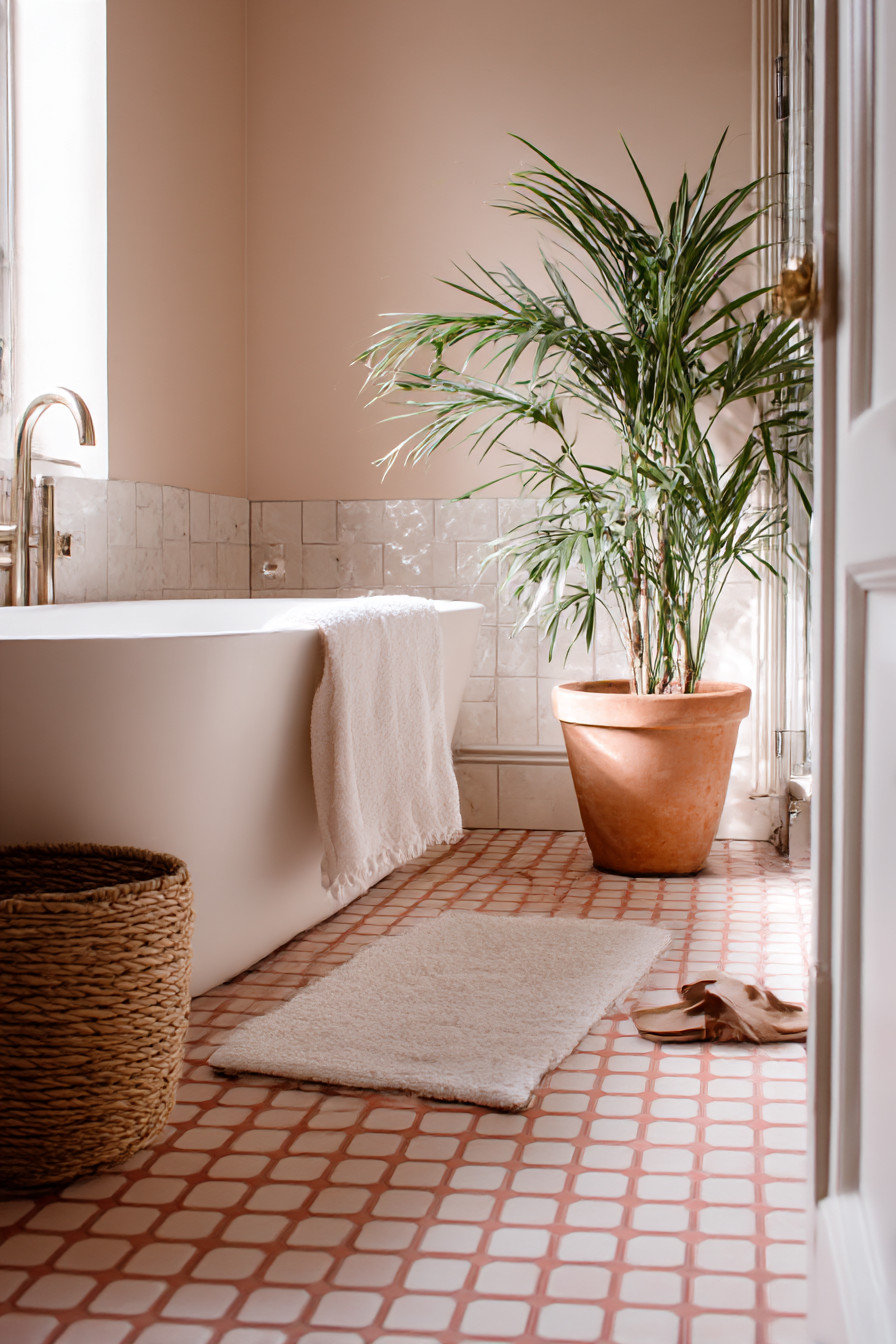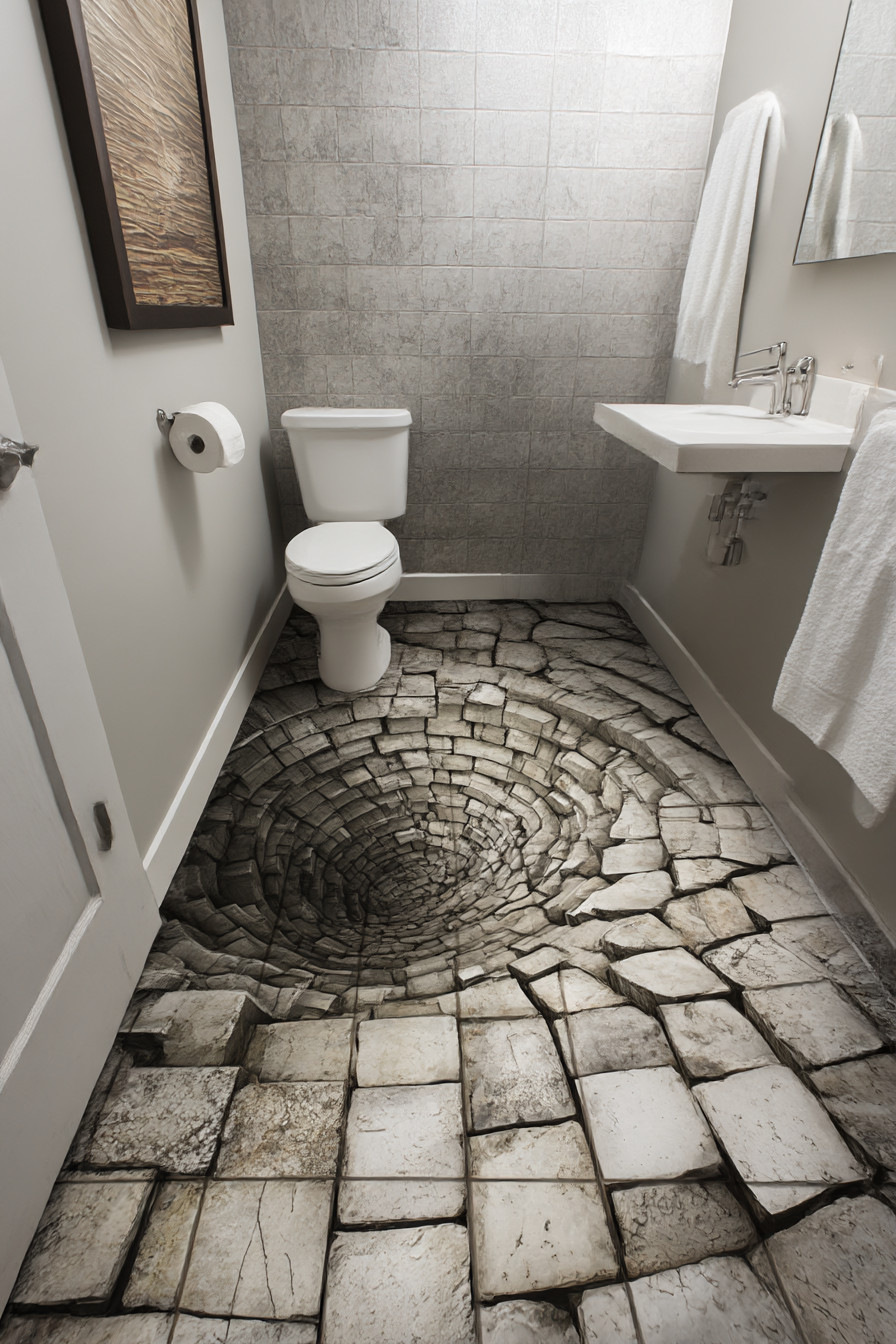
Have you ever been in a bathroom that is so small you feel like Alice after drinking the wrong potion? I swear sometimes bathrooms are built to test your spatial awareness instead of providing a comfortable place to be. Recently, I helped my neighbor Sarah renovate her guest bathroom. Her bathroom is so small that when you open the door, you need to dance to avoid stepping over the toilet. However, after years of dealing with very small spaces, I have found that the right flooring tiles can be a true magical solution to making your space appear larger. Most people view their bathroom floors as being just “there” as something that catches water and looks fairly clean. However, I’ve seen identical bathrooms transform from being claustrophobic caves into surprisingly open retreats simply based on the tile selection. It’s not illusions and magic tricks, it’s using the knowledge of how we perceive visual information and working with our brains, not against it.
One of the largest transformations (pun intended) I see regularly is the use of large format tiles. While it seems counter-intuitive, won’t large format tiles overwhelm a small space? I thought that when my contractor first suggested 24 inch porcelain tiles for my small en-suite. I envisioned maybe 6 tiles for the entire floor and it seemed crazy. However, few grout lines means fewer visual interruptions, and fewer visual interruptions allows your eye to travel farther before hitting a boundary. Instead of feeling choppy, the space will feel open and expansive.
That is why I installed those large format tiles three years ago and that is why guests still comment on how spacious that bathroom feels. The secret isn’t the actual square foot measurement — it’s the single, unbroken sweep of surface that tricks your brain into thinking there is more room to move. Compare this to the mosaics I lived with prior: hundreds of individual squares creating a chaotic, fractured surface that made the floor feel like it was closing in around my ankles.
In addition to the layout of the tiles, color plays a vital part, although not always in the ways that you would expect. Yes, light colors generally create a larger feeling space — I have seen this work beautifully with a pale gray porcelain that has slight veining. However, pure white? That can actually have an adverse effect in a windowless bathroom, creating a cold, institutional look that feels confining rather than expansive. I learned this the hard way in a rental apartment where brilliant white tiles reflected the harsh overhead lighting in a manner that caused me to squint every morning.
Warmth and depth in a tile is far more effective than brightness. Think of a soft cream with undertones that shift slightly depending upon the light source, or a pale stone color that feels organic rather than artificial. I recently purchased a tile that appeared almost white in the showroom but displayed faint beige undertones once installed. The warmth made the small space feel welcoming, rather than cramped — and it made a difference, more than you might realize.

There is also the issue of pattern. Installing tiles diagonally can genuinely create the illusion of more space by directing the viewer’s eye along a longer visual path as opposed to stopping at the straight edges of traditional grid-based installations. I attempted this in Sarah’s bathroom by laying 12 x 24 tiles at a 45 degree angle. The diagonal lines created movement and visual flow that reduced the narrowness of the space. However, there is the caveat that diagonal patterns require more cuts and waste, so budget accordingly. We used approximately 15% more tile for that job.
Another trick that often surprises people: extending the same tile from floor to walls, at least in part. This creates visual continuity that eliminates the stopping point where floor meets wall. In a particularly narrow powder room, I ran the tile from floor to wall approximately 18 inches high, then painted. The continuous surface created the illusion that the room was taller and more cohesive rather than divided horizontally.
While both practical considerations and visual considerations are important when selecting your tile, moisture-resistance is not negotiable. I have witnessed far too many beautiful natural-stone flooring systems ruined by poor sealing in the high-humidity environments of showers. Porcelain consistently provides the best performance in wet conditions, and modern products offer stunning stone and wood-look designs that deceive even the closest observer. Maintenance is another consideration. Beautiful dark-colored tiles that reflect every drop of water? They will drive you crazy in a month.
Finally, don’t overlook the importance of texture. Tiles that are completely smooth become ice-skating rinks when wet. Heavy textured tiles look old-fashioned and collect dirt in the grooves. I have done well with moderate textures — tiles that feel slightly rough under foot, but look smooth from a standing position. Always safety-first.

The final consideration is grout color. A dark grout color creates prominent grid lines that can break up a small space. On the other hand, grout that matches the tile color nearly disappears, allowing for a continuous surface. I usually recommend that customers stay within two shades of the tile color to achieve the most seamless appearance.
As with all elements of interior design, the quality of installation will either support or ruin the visual effects of these techniques. Perfectly level, evenly spaced tiles create the smooth, unbroken surfaces that trick your eye into perceiving more space. Poor-quality installation with uneven gaps or lippage between tiles will destroy the illusion entirely. Quality tile installers may cost more, but the value of the investment is well-worth it.
Once the tile installation is complete, the interaction of the tile choice(s), lighting will also play a significant role. Lighting can accentuate the beauty of the tile surfaces or highlight the flaws of poorly-made or cheap tile. As with all elements of interior design, I always test tile samples under the exact lighting conditions they will be exposed to, not just the bright showroom fluorescent lights.
The transformative possibilities of tile selection continue to amaze me. That guest bathroom that once felt like a walk-in closet now warmly welcomes visitors with an unexpected sense of openness. Sarah sent me pictures of her bathroom recently — the sunlight illuminates the diagonal tiles, creating subtle shadows that add depth and interest to what was once a completely forgettable functional space.