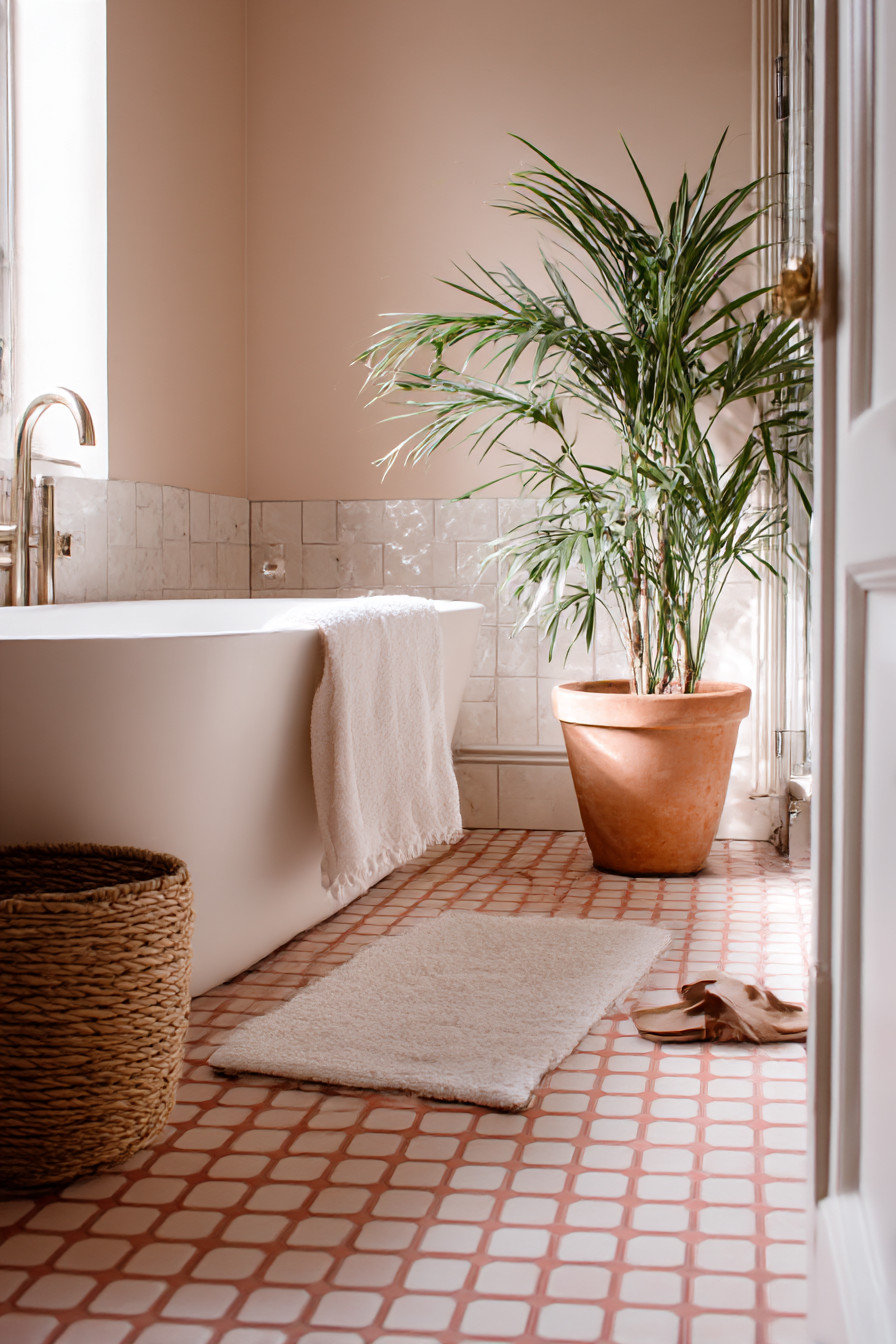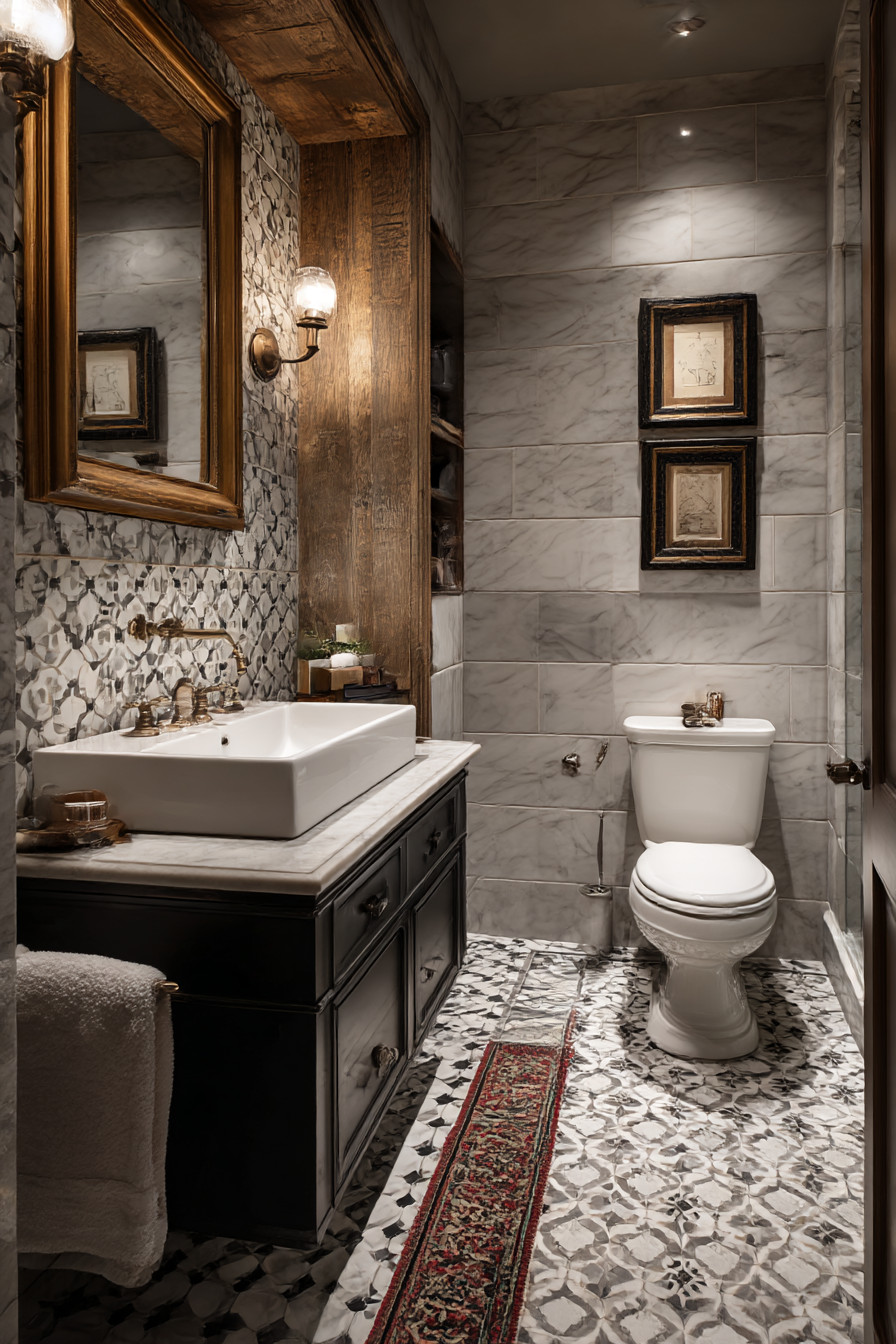
Recently, I was in my hallway bathroom at 6:30 AM. I was standing next to the sink as my partner brushed his teeth. It suddenly dawned on me that the area in front of the bathroom sink is probably the most trafficked part of the house — after school the kids come through the back door covered in mud and have to go straight to the bathroom; before going out on dates the teens stand at the sink looking at themselves in the mirror and getting ready for the evening. In short, the bathroom is working harder than any other room in the house.
My bathroom wasn’t always functional. It was beige. Not just beige — aggressively beige. Beige that makes you feel like you’re brushing your teeth in a waiting room. The medicine cabinet was almost empty. There were no towel rails, just one small hook on the back of the door. And the floor would stain with water instantly.
For the past three years, I’ve worked to turn this bathroom into a place where my family of four — plus the dog, who for some reason always wants a drink at the exact same moment as someone is using the sink — can functionally use. Below are some of the things I learned about making a hallway bathroom functional for multiple users without breaking the bank or losing your mind.
Changing the floor was everything. Everything. I ripped out the old vinyl. To be honest, I wish I had taken photos of it, because it was amazingly ugly. I then installed large format ceramic tile with a slight texture. This type of tile is not textured enough to catch dirt, but textured enough to provide grip to prevent slipping while getting out of the shower. The cost for the entire bathroom was approximately £400, however it appears to look like we spent twice that amount. I also chose dark gray grout. Choosing dark gray grout was by far my best decision. Light colored grout in a family bathroom is just begging for stains.
Storage became my number one focus. The original medicine cabinet was approximately 12 inches wide. It was useless. I was able to find a larger recessed medicine cabinet on clearance at a local supplier. It was originally priced at £200, but due to a minor scratch on the mirror I purchased it for £85. Nobody notices the scratch, but everybody notices we now have places to store things. I also installed a narrow shelf unit behind the door for storing toilet paper, cleaning supplies and all those miscellaneous bathroom items that used to be stored on the countertop.

However, the important factor regarding storage in a shared bathroom is that it requires zones. For example, the top shelf of the medicine cabinet contains adult products such as razors, prescription medication and quality face creams. The middle shelf contains common products for everyone. The bottom shelf is kid only products. My 12-year-old can access his contact lens solution and acne wash without assistance and without climbing on the counter. This was game changing.
Replacing the mirror was a bit more complicated. Kids want to see themselves. Adults want proper lighting. I replaced the standard mirror with one that includes built-in LED lights on the sides. Sounds expensive, but I bought it from a bathroom display case at an end of season sale for £120. The lighting is sufficient for close-up work, yet it does not seem harsh at 6 AM. Both of my children are able to view themselves without having to stand on their toes. I am able to determine if my makeup is adequate.
Installing towel racks became a tactical battle. One towel hook behind the door is insufficient for a family of four. I installed a towel ladder, which is essentially a decorative wooden rack that leans against the wall. It cost £45 and will hold six towels. Each child has their own designated hook, which has removed the disputes over whose towel is whose.
Deciding on a paint color for the bathroom took forever. I wanted a color that felt refreshing, yet would not show fingerprints. We painted the walls a soft blue-gray color called “Morning Mist” (the names of these colors are ridiculous). It’s light enough to maintain an open feel in the small bathroom, yet has enough color to feel deliberate. The semi-gloss finish is easy to wipe down, which matters more than you think in a bathroom that receives as much usage as ours does.
We did some practical updates to the shower. We left the existing tub-shower combo intact, but installed a handheld shower head in addition to the fixed shower head. The kids can rinse off without washing their hair and it makes cleaning the tub a lot easier. Our shower curtain is machine washable — I learned this the hard way after spending hours attempting to scrub mildew out of a fabric liner.
Adding layers of lighting made a huge difference. The original ceiling fixture was one of those generic fixtures that creates shadow everywhere. We added an LED light strip underneath the medicine cabinet for task lighting. We retained the overhead fixture for overall lighting. With the combination of the two types of lighting, no one is squinting at themselves in the mirror, nor do they bump into the walls when they get up in the middle of the night.

Kid-friendly features were implemented slowly. Lower towel hooks, a folding step stool that mounts to the wall, non-skid mats in the bathtub. The soap dispenser is mounted low, so that the kids can access the soap themselves, which reduces mess and gives them more independence. These small changes have cost us approximately £50, yet have eliminated daily frustrations.
The largest mistake I made was installing a beautiful yet impractical faucet that resembled a luxury hotel faucet. It had a long, elegant spout that sprayed water everywhere and was difficult to clean. We replaced it after six months with something that was more practical. As it turns out sometimes practical is better than pretty and that is OK.
Upgrading ventilation was important and boring. We upgraded the exhaust fan to a newer, more efficient model that is quieter. No one cares about fans until you notice that the walls are beginning to peel due to excessive humidity. The new fan actually moves air and doesn’t sound like a helicopter landing on the roof.
What surprised me the most was how many of the smaller details mattered. A good toilet paper roll that won’t fall apart when the kids pull on it. Towel bars mounted high enough that the towels don’t drag on the floor. A small trash can that fits in the corner but is large enough to be useful. These may not be Instagram-worthy improvements, but these are the things that make a bathroom actually functional for daily living.