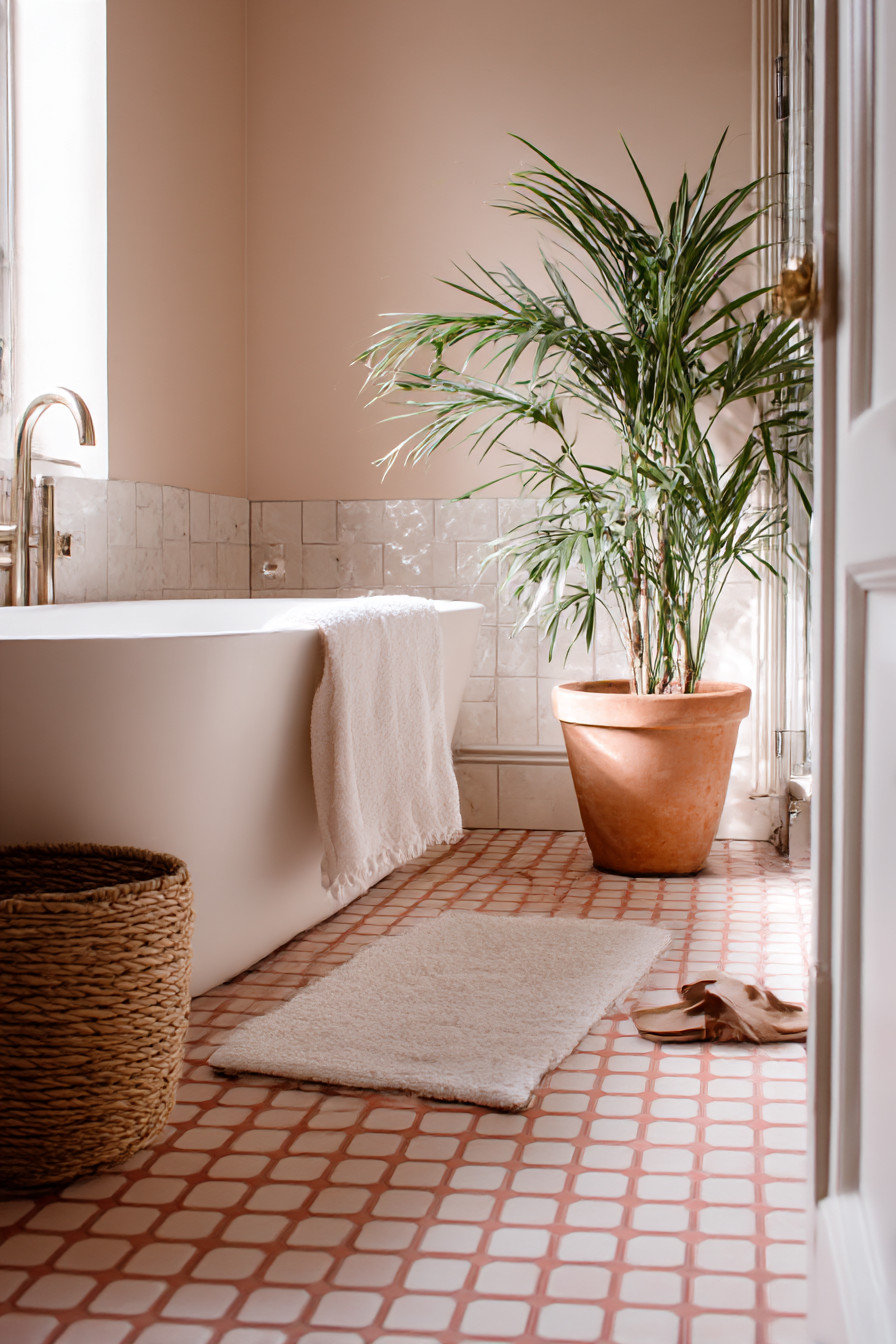
Have you ever walked into a bathroom and instantly felt cozy? Not spa-cool or sterile, but as inviting as your grandma’s kitchen always seemed? I inadvertently discovered the feeling of coziness while I was helping my neighbor Sarah finish off her downstairs powder room last Spring.
She’d been fighting with what she called her “beige issue” – the classic builder-beige stuff that screams “rental unit” even if you actually own the house. We were standing in her powder room, surrounded by paint chips (which is where do you put them in a half-bathroom?) when she picked up a rich, chocolate brown sample and said, “This is nice, but isn’t brown kinda…heavy for a bathroom?”
I thought the same thing. Brown feels serious. Male. Heavy. It’s definitely not the bright, fresh vibe most people are going for when decorating their bathrooms. There was something about that particular shade of brown – Benjamin Moore’s Chocolate Mousse – that reminded me of good coffee and expensive leather boots. Things that are warm and comforting.
Three weeks later, Sarah’s tiny powder room has gotten the most compliments in her entire house. People are lingering in there. Seriously. Her eight-year-old daughter is now brushing her teeth in there instead of upstairs “because it feels like a cozy cave, but also pretty.”
It wasn’t until then that I realized that brown doesn’t have to be boring or old-fashioned. It can be the ultimate bathroom luxury item – like a cashmere sweater. It’s luxurious. Timeless. And makes everything feel much pricier than it actually was.

The trick is knowing which browns will work in various places, and why. For example, take chocolate tile. In my own guest bathroom remodel last year (Heath Ceramics’ beautiful dark brown subway tiles – ridiculously pricey, but absolutely stunning), I paired those tiles against white grout and warm brass hardware, and they look very rich – but not cave-like. My strategy was to only tile the entire accent wall behind the vanity, not the whole room.
However, what I learned the hard way is that chocolate brown ceramic displays water spots like crazy. I mean, every drop. It’s so frustrating, especially if you’re not prepared for it. That’s why I hang a little squeegee from a discreet hook near the sink, and I use it. Thirty seconds after each shower, the tiles look brand-new again.
For painting, I’ve done better with softer, warmer brown tones – those tan, beige, and mushroom shades that read neutral, yet are unique. Two years ago, I painted my main bathroom in Sherwin-Williams’ Accessible Beige. It looks fantastic. Depending on the time of day, it changes. It appears cool and sophisticated during the morning hours due to the sunlight. During the afternoon hours, when the sun shines through the frosted glass window, it appears warm and golden.
I believe people make a mistake when they try pairing brown with stark white everything else, assuming it’ll create an equilibrium. It doesn’t. It only makes the brown appear dull and the white cold. I find that when you focus on creating a warm ambiance in your brown bathroom (for example, creamy-colored towels and antique brass fixtures), it produces an attractive combination.
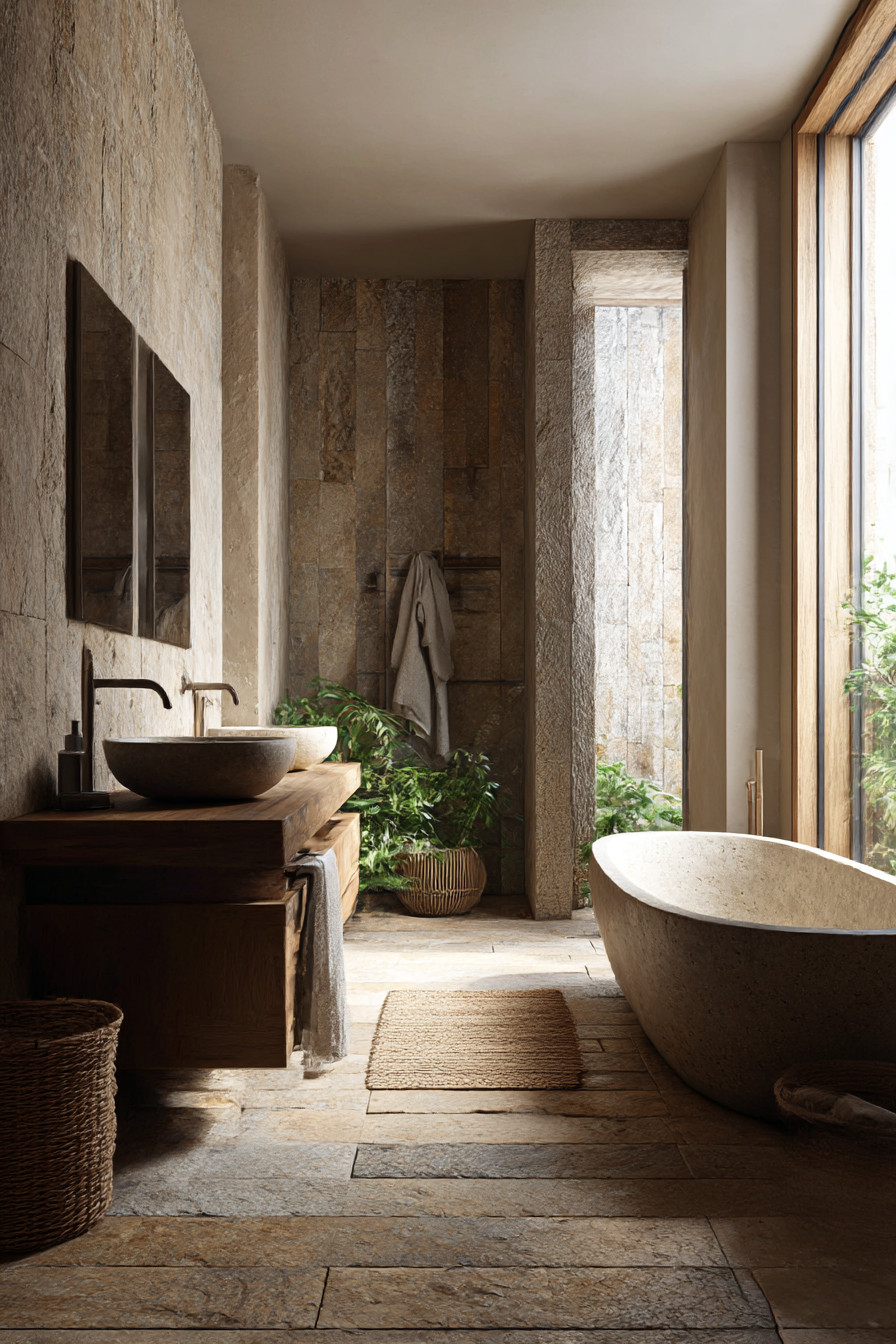
Natural materials are another way to highlight the beauty of brown bathrooms. Wood vanities in walnut or even painted wood with brown undertones produce this organic flow that seems thoughtful, not coincidental. I obtained a vintage teak vanity from a salvage yard near the outskirts of our city ($200 + refinish supplies, vs. $800 + for a new one) and paired it with a ceramic vessel sink in a warm, earthy tone. The contrasting texture of the sink and wood grain adds visual appeal without making the bathroom appear busy.
Keep in mind that, regardless of how visually appealing wood is in a bathroom setting, you should consider the practical aspects. I quickly learned to apply the correct coats of marine-grade polyurethane to the wood surfaces, and I advise others to follow suit when using wood tones in areas exposed to moisture.
A method I enjoy utilizing to create a cohesive brown bathroom is by blending multiple brown tones, rather than solely focusing on one. Tan walls, dark brown tile accents, and wood components in medium brown produce this layered aesthetic that suggests items have been curated over time and not simultaneously purchased from the same showroom. It is essentially the bathroom version of a thoughtfully curated wardrobe – everything works together as they share a common theme (warmth, natural materials, earthy tones), however, none of the items match perfectly.
Lighting is also crucial. To prevent a brown bathroom from appearing somber or depressing, it needs to be lit warmly. I switched from the standard cool-white LED bulbs to warm-white LED bulbs (2700K color temperature for the technical types), and installed a small table lamp with a linen shade on the vanity counter. It sounds bizarre, I realize. However, the soft, indirect lighting created a sense of comfort and relaxation in the space, transforming it from functional to inviting.
When selecting accessories for a brown bathroom, I avoid overly ornate, fragile items. Brown bathrooms require solid, uncomplicated items: soft, white or cream towels, a wooden stool for additional seating, perhaps a single larger potted plant (I’ve noticed pothos do extremely well in humid bathroom environments).

My point is that the objective is to create a sense of warmth without clutter, elegance without pretentiousness.
I am honest – brown bathrooms are not for everyone. If you prefer vibrant, stimulating bathroom spaces that awake you with their brightness and optimism, this may not be the color palette for you. On the other hand, if you desire a bathroom that provides a sense of sanctuary, and a location where you truly wish to spend time soaking in the bathtub or completing your skincare routine, brown is capable of producing a soothing, comfortable environment that is both calming and tasteful.
The greatest advantage of brown bathrooms is that they age extremely well. Good brown tones are far less likely to grow outdated, unlike trendy colors, which often begin to appear tired in a matter of years. Brown tones are flexible enough to complement a variety of new accent colors, towels, or art. A foundation that expands with you, rather than limiting your choices.
Sarah still sends me pictures of her powder room occasionally, typically when someone comments on its beauty. Just last week: “Dinner guest wanted to know the paint color information!” I’m not surprised. As soon as you experience how brown can transform a bathroom from unremarkable to unforgettable, it is difficult to revert to the safest option – a sea of beige.