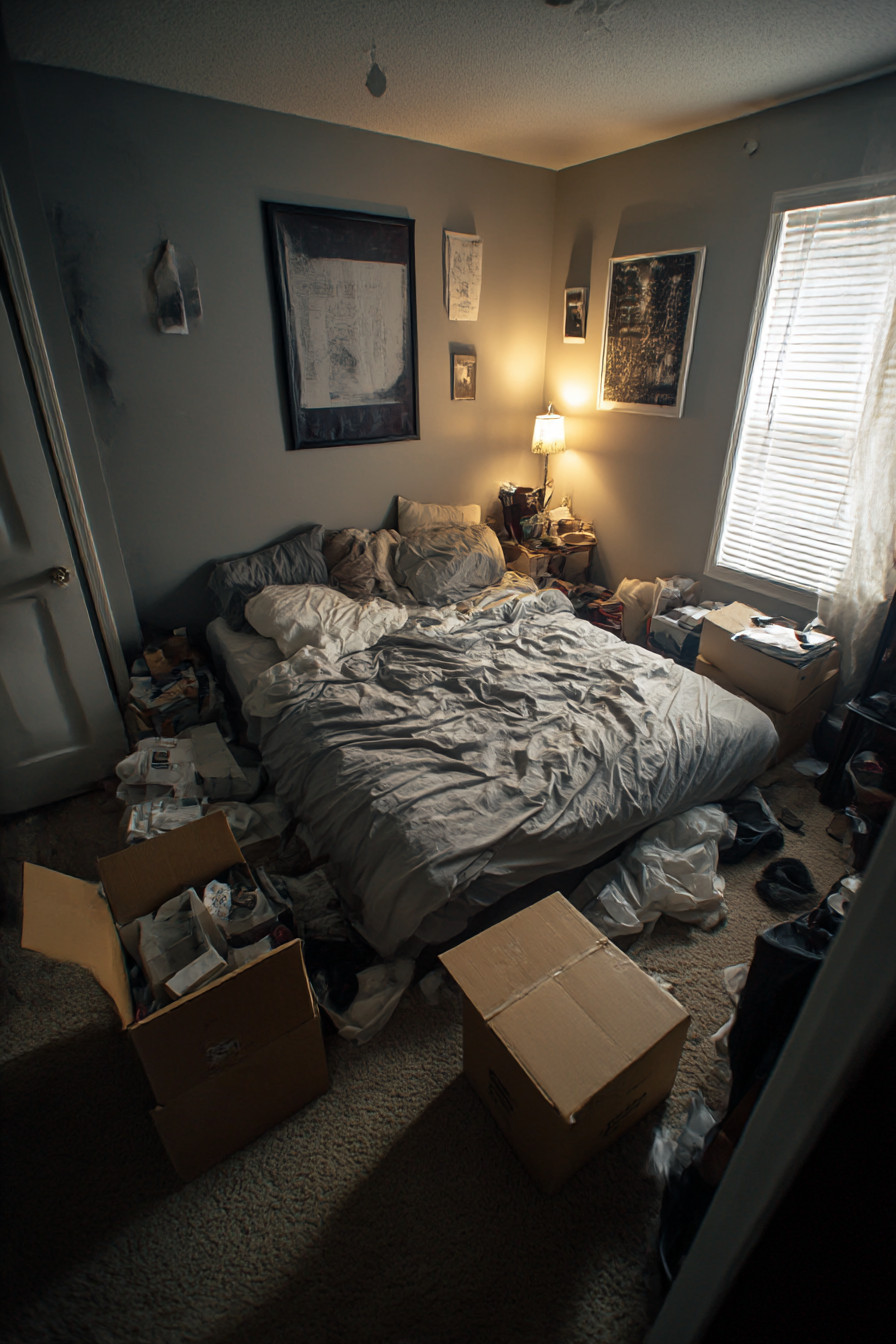
I am writing this from what was our spare room; however, after we down sized last year, it is now our master bedroom. Ironically, although this room is much smaller than many would consider a good-sized bedroom, I find it to be more restful than our former very large bedroom. Perhaps it is due to the fact that I had to be extremely selective about what items remained in the room and what items left, or perhaps it is simply the fact that every decision that was made regarding this room was based upon necessity and therefore earned the right to stay.
Upon entering this home for the first time, my husband took one glance at the master bedroom and declared it to be “cosy”. I later discovered that estate agents refer to this phrase as “your King Size Bed may not fit”. He was correct. This room is approximately 10 x 12 feet, with a slant to one side and windows that are both lovely, yet consume valuable wall space. As such, this room presents “spacial challenges”.
However, what I have discovered after six months of residing in what seems to be a beautiful, well-organized jewelry box, is that the limited square footage of small bedrooms causes individuals to develop creative ways to utilize the available space and ultimately this creates freedom for individuals to accept the space for what it is.
The first area of consideration for my husband and I, as far as the bedroom goes, was the bed. Our King Size bed with its substantial footboard, was not an option. I spent many weeks measuring, and re-measuring to see if we could somehow fit the bed into the room. My sister finally stopped by, took a quick look at my drawings and stated, “Claire, you are being completely unreasonable. Purchase a Queen size bed and take advantage of the additional floor space to place something that will truly enhance your lifestyle.”
This suggestion seemed quite reasonable, especially considering that we had been spending countless hours researching and deliberating over whether or not we could fit the larger bed into the room. Ultimately, we purchased a Queen Size Platform bed with built-in drawers underneath. Although the drawer configuration was not the most aesthetically pleasing, they provided a practical solution for storing out-of-season clothing, additional linens, and my library of books I claim I will read again sometime. In addition to providing ample storage, the platform design eliminated the need for a bulky bed frame that consumed a great deal of visual space. Furthermore, I can now easily walk around the entire bed without performing that awkward “sideways shuffle” you do when there is furniture located too close to the walls.

The second significant change to our bedroom was going vertical with storage. I’m referring to the installation of floor-to-ceiling built-ins that my brother-in-law assisted me in completing during a sweltering hot weekend in late August. I utilized IKEA PAX Wardrobes as the base for these built-ins. Although significantly less expensive than purchasing custom-built-in units, painting them to match the surrounding walls, helped them to blend into the background rather than dominate the room. Above the built-ins, I installed open shelving to store items I don’t require daily access to. For example, seasonal blankets, travel bags, and that elegant luggage set I have owned for years, but can’t seem to part with.
Choosing the color scheme for the room was an arduous task. I had previously experienced difficulties selecting paint colors for various projects (for example, that time I painted my bathroom a “serene blue” color, but unfortunately ended up with a “Medical Facility Waiting Room Blue”). Smaller rooms can accommodate bold colors, but they must be bold colors that are suitable for the space. After considerable deliberation, I selected a dark, rich green color (Benjamin Moore’s Hunter Green) for the accent wall that lies directly behind the bed. I chose to leave the remaining three walls painted white to prevent the room from becoming overly confined.
Selecting lighting for the room was far more challenging than I anticipated. While table lamps on nightstands consume a tremendous amount of surface space in small rooms, overhead lighting provides an atmosphere similar to that of a hotel. I eventually decided to install wall mounted swing arm lights on either side of the bed. These lighting fixtures allowed me to clear the limited surface space available on the nightstands, and I can adjust their position precisely where I need them to create adequate lighting for reading. Additionally, I find the action of folding the lighting arms against the wall to be highly satisfying.
The selection process for the mirrors in the room was another experience. Many individuals state that mirrors make small spaces appear larger, and this is indeed accurate. However, it is the placement of the mirrors that matters far more than the size of the mirrors themselves. Initially, I installed a large mirror opposite the window, hoping to reflect natural light throughout the room. Unfortunately, the mirror merely reflected the image of my neighbor’s home back to me, which was certainly not calming to behold at bedtime. I now possess a long, thin mirror that is installed on the interior of the closet door. This mirror serves the purpose of allowing me to dress, and it remains hidden when the door is closed.

Another challenge that I faced when decorating the room involved selecting window treatments. While heavy drapes created an overwhelming feeling in the room, leaving the windows uncovered created a sense of exposure. I eventually resolved this dilemma by installing cream-colored linen Roman blinds. These blinds provided a level of privacy while consuming minimal visual space. They also allow maximum sunlight to enter the room during daylight hours, which is essential since this room does not receive direct sunlight until mid-afternoon.
As I considered the options for nightstands, I realized that traditional nightstands would further encroach upon the already limited space in the room. Therefore, I opted to utilize two narrow floating shelves as nightstands. Each shelf is deep enough to accommodate a glass of water, cell phone charger, and the book I am currently reading. However, the shelves are shallow enough to not impede upon the walking path through the room. Beneath each shelf, I installed small hooks to hang various items, including my reading glasses and the sleep mask I use to help me fall asleep (although I suspect it is more of a placebo).
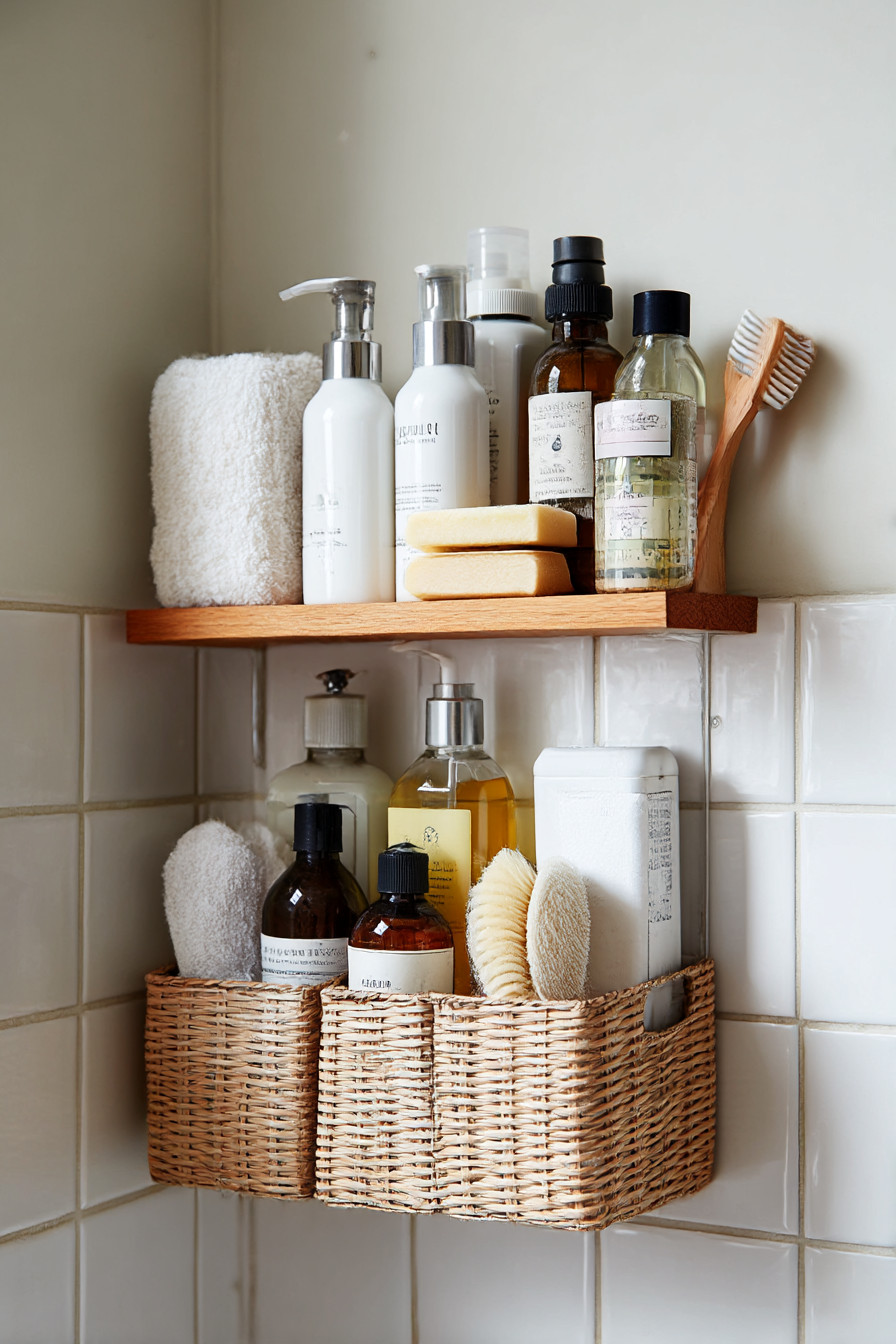
Storage bins have proven to be some of the most helpful tools in the room. And of course, the storage bins must be visually appealing. I have placed woven baskets under the floating shelves for storing items such as hand cream, lip balm, and the numerous miscellaneous items that tend to accumulate on nightstands. Everything in the room has a designated location, which while seemingly obsessive, actually facilitates a more efficient morning routine.
The temperature regulation in this room is somewhat unique. Due to the room’s smaller size, it becomes warm rather quickly. However, opening the windows allows cold air to circulate directly onto the bed. I found a ceiling fan that served as an effective solution to this issue. However, locating a fan that would not overwhelm the space took some searching. The fan I eventually located features reversible motor settings for summer cooling and winter circulation, and includes a decorative light fixture that serves as the primary overhead lighting source for the room.