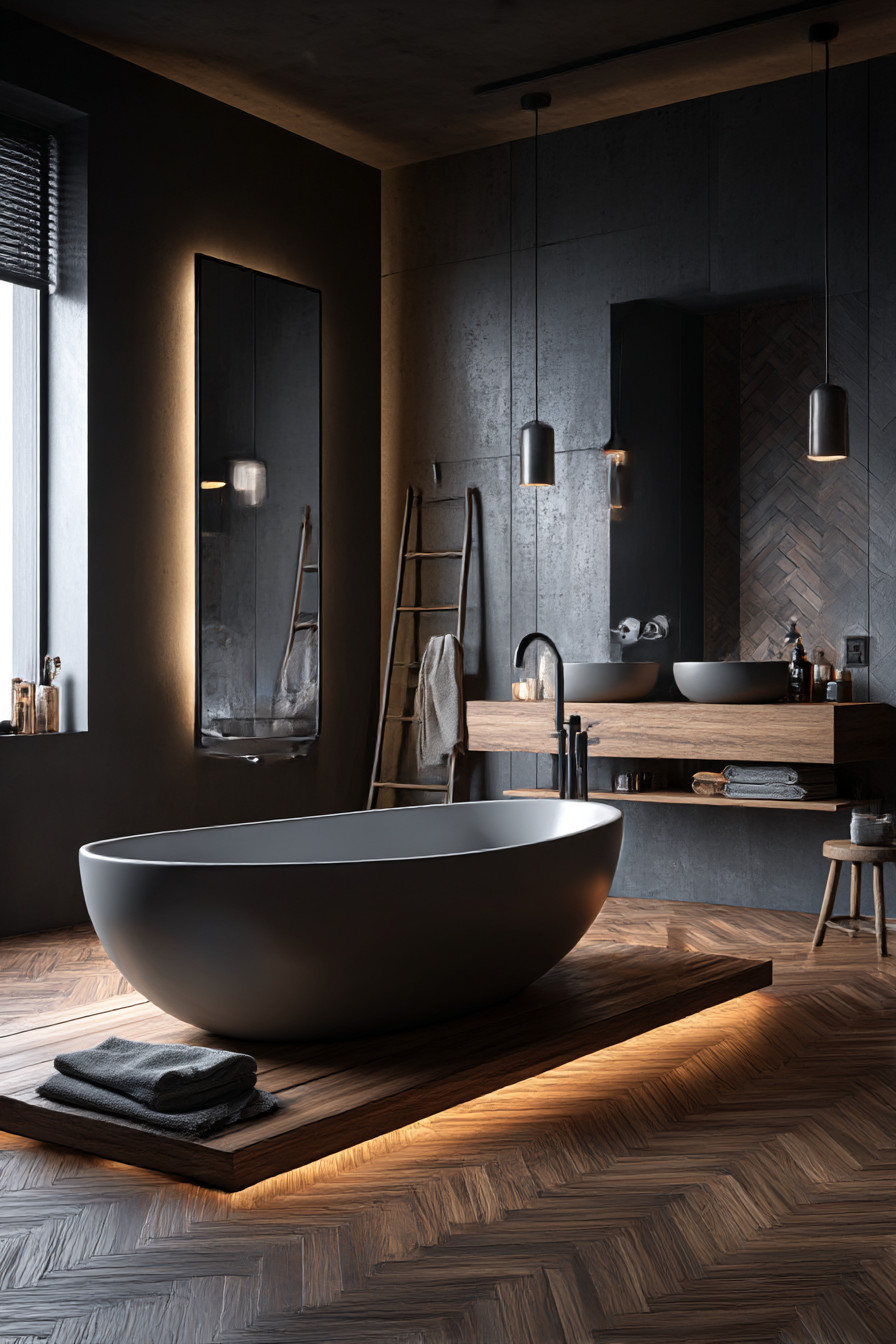
. Entering the typical men’s restroom is akin to stepping into a cave designed by an individual that believes “masculine” equals dark slate, exposed pipes, and colors inspired by a coal mine. You’ll recognize — the industrial elements, the all-black fixtures, the obvious “manliness” as opposed to the “good design” of an unpretentious design.
I’ve experienced many of the aforementioned spaces and I’m aware that they lack one fundamental component: sophisticated design free of stereotypes. When my brother requested my assistance to renovate his master bath a few months ago, he expressed his desire to create a space that felt mature and not a teenage boy’s interpretation of what a masculine bathroom should be. His request stuck with me for one reason: it accurately captures what is wrong with the majority of masculine bathroom designs. They are performative and not truly refined.
My brother’s master bathroom design experience taught me a lot concerning masculine design. It was not about removing warmth and softness; it was about selecting quality materials, clean lines and subtle design components that provide weight without appearing to be overpowering. We began with a warm white oak vanity and paired it with black granite featuring beautiful grey veining. The black granite did not feature the dull black slabs so commonly utilized today. Rather, the granite featured movement and character. The combination provided a sense of richness, but not oppression.
Herein lies what actually succeeds: utilizing natural materials that age well. This includes actual stone, not plastic-looking alternatives that appear to be stone under bathroom lighting. Moisture-resistant wood that has been properly sealed to allow for the wood to show its grain. Brushed finish metal fixtures as opposed to polished chrome (which reveals each water mark) and matte black (which displays each finger print.) These materials are typically more expensive initially, however they will develop their own unique characteristics and patina as they age.
Color is perhaps the area of greatest error within most masculine bathrooms. Navy blue walls may have appeared dramatic in photographs, but after living with them for six months, you will understand why they feel oppressive. I have discovered that the most effective masculine spaces utilize warm neutral colors. Some examples include mushroom grey, soft taupe, or even cream with subtle texture. These colors feel heavy, yet they don’t cause the space to feel like a bunker.

Lighting was a major factor in transforming my brother’s bathroom. In addition to installing pendants above the sink and using recessed lighting on dimmer switches, we created layered lighting. This allowed my brother to have bright task lighting for shaving and soft ambient lighting for his evening routine. The pendants we selected featured simple brass frames with clear glass. Although the pendants were masculine, they were not overly industrial.
Storage was critical since clutter is detrimental to refinement. We created a recessed medicine cabinet that disappeared into the wall, and we also installed deep drawers in the vanity with dividers. Everything had a designated location, therefore the space remained organized and tidy. I learned this lesson the hard way in my own bathroom. Open shelving appears fantastic in magazines, however it gathers dust and creates visual chaos due to the placement of daily-use products.
The shower was the true focal point. We utilized large format tiles in a soft gray color with slight variations, and ran them floor to ceiling to create clean lines. The shower fixtures we selected were brushed nickel. The brushed nickel fixtures were warm enough to feel inviting while cool enough to feel fresh. A built-in product niche eliminated the requirement for the obnoxious plastic caddies that scream “I gave up on design.” The clear glass enclosure allowed for full visibility without restricting the appearance of the space.
One element that greatly affected the overall design was the inclusion of heated flooring. While heated flooring does offer a level of luxury, it provides a significant functional benefit. Cold tile underfoot can be uncomfortable during early morning hours. Additionally, the heat reduces the risk of moisture-related issues that can negatively affect the grout and lead to future maintenance concerns.
A final aspect worth mentioning is the mirror. Many men’s bathrooms fail here. Forget about industrial pipe frames or distressed wood trim. We selected a rectangular mirror with a thin black metal frame. The frame was almost non-existent, providing a subtle separation between the mirror and the surrounding area. The mirror was proportionally correct. It was wide enough to span most of the vanity without appearing to overwhelm the wall.
Our accessories were limited in number, but of high quality. A small succulent (yes, plants fit within masculine spaces) was included along with a wooden tray to store the necessities of everyday life. Towels in charcoal grey, that matched the color of the stone, completed our selections. We deliberately avoided inspirational quotes, rustic signs, and other elements that attempted to too aggressively indicate masculinity. The space communicated itself through quality materials and intentional dimensions.

Six months later, my brother’s wife informed us that visitors consistently complimented their bathroom. Not because it was dramatically masculine or impressively industrial. Rather, it was because it felt sophisticated and welcoming. The space satisfied both parties’ preferences without sacrificing either party’s sense of style.
What I gained from this project is that masculine design doesn’t require aggression or overt theme-based design. The most effective masculine bathrooms that I have observed share common traits. They employ natural materials honestly, prioritize function in conjunction with aesthetics, are void of excessive decorative elements, and feel substantial and well-constructed as opposed to trendy or transitory.
The cost was greater than that of a standard renovation. Quality materials and a professional installation are expensive. However, nearly three years after completion, the space continues to appear modern and well-designed. That is the distinction between adhering to masculine design trends and creating a truly refined space that simply appeals to masculine tastes.
Occasionally the most masculine decision you can make is to opt for quality over display, substance over symbolism, and longevity over superficial impressions. That is the essence of refined masculine design.