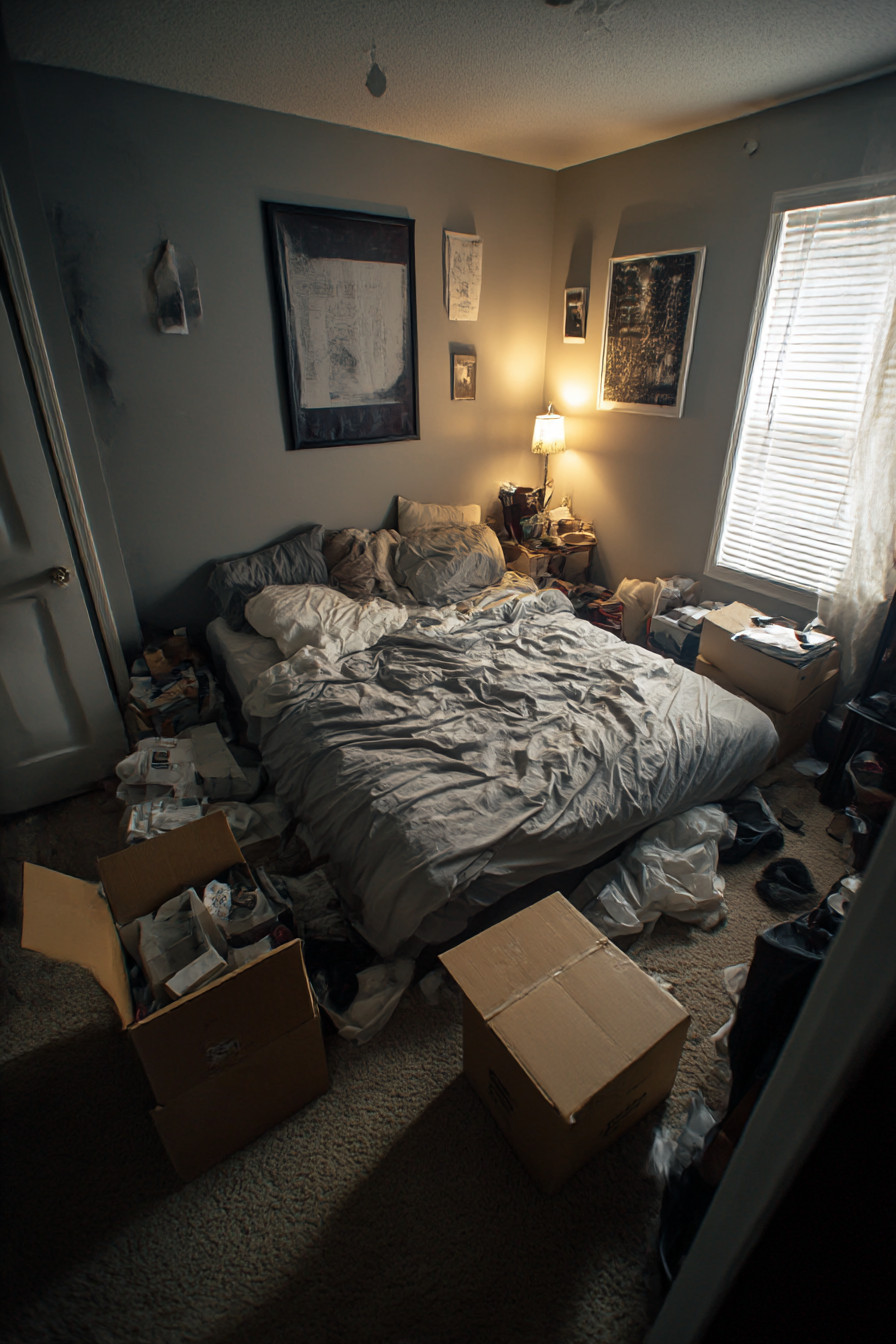
Have you ever walked into a 5×6 foot bathroom and felt the walls closing in on you? For nearly a year, I felt the same way. I believe the previous owners of our home put the huge vanity in the bathroom because they liked how it looked in the pictures. But in reality, it made the bathroom look like a cave. On top of that, we also had navy blue walls, a towel rack, a toilet brush holder, a soap dispenser, and three types of storage baskets. Every time I would go into the bathroom I felt like I was going through an obstacle course.
The final straw was when my sister came to visit and she couldn’t fit past the vanity and the door. She literally had to slither past the vanity to exit. Both of us ended up laughing, but I was mortified. I mean, I’m supposed to know something about designing spaces, yet I lived in a bathroom that felt more like a storage unit than a sanctuary.
So, I decided to learn how to fix my problem. What I quickly learned was that small bathrooms are NOT about putting more “stuff” in them. Small bathrooms are about eliminating anything you don’t absolutely need and then making every other item perform double duty.
I began by removing EVERYTHING. I mean, completely empty. The bathroom looked bare. Almost clinical. Yet, for the first time, I could see the true form of the space. The area wasn’t small, it was just suffocating due to all the extra accessories. The navy blue walls, which I originally thought were the source of the problems, now seemed much more bearable without all of the other distractions.
The most significant change I made was to replace the large vanity with a floating vanity that’s approximately 60% the size of the original. While I did lose some storage space, I gained something far more valuable — the perception of space. When you’re able to see the floor space underneath and around a vanity, your brain reads the room as larger. It’s a simple trick, but trust me, it works.

When it comes to painting, I chose the palest possible gray/white. Not pure white, as it can sometimes appear cold and industrial in a windowless powder room, but something that has a slight warmth to make it inviting. I used Farrow & Ball’s Pointing, which has a subtle gray undertone that changes color based upon the lighting. More expensive than I expected — around £45/litre vs. £20 for regular paint — but the finish is a soft, chalky texture that looks amazing in photos and feels premium to the touch.
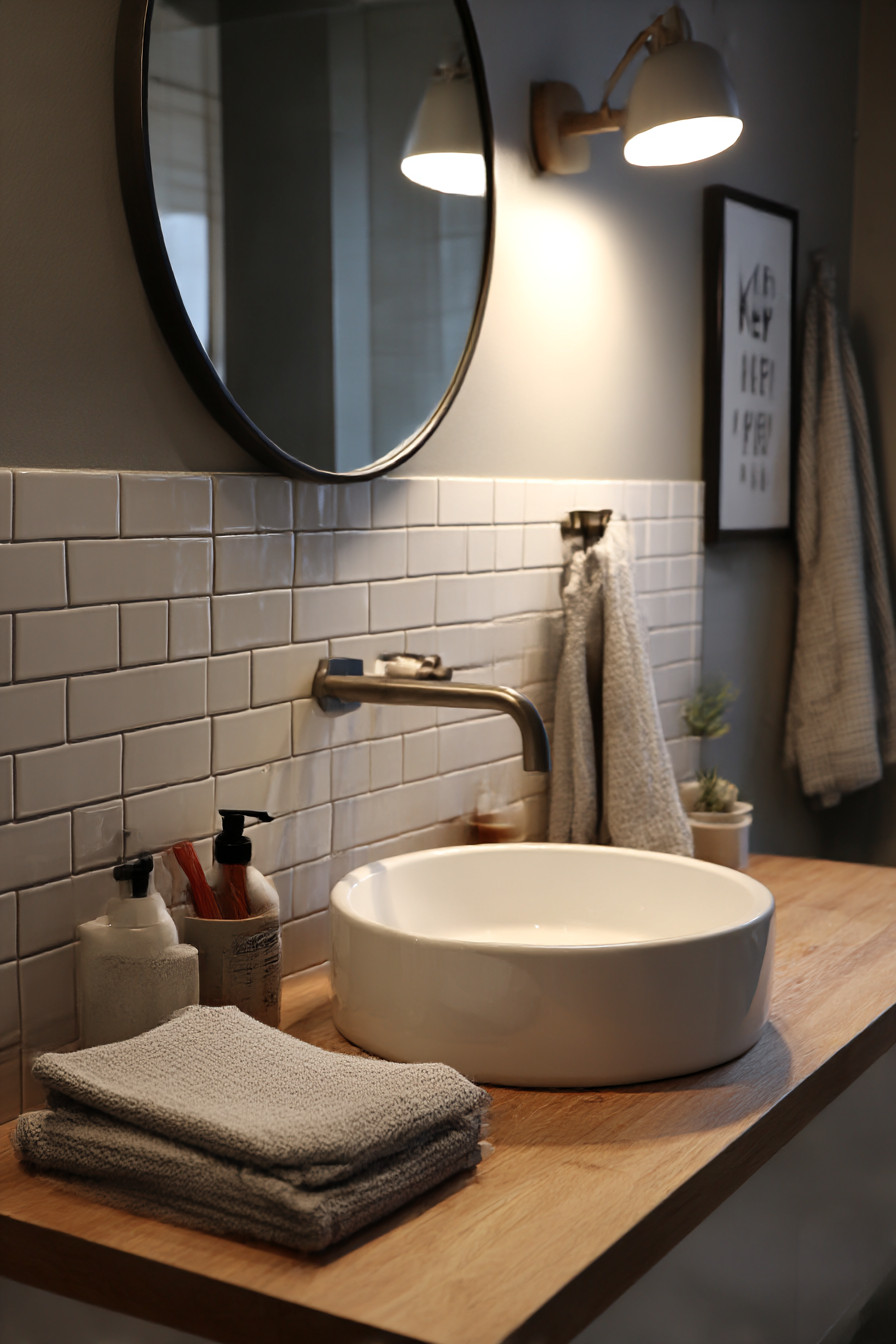
Lighting made a big difference in this bathroom as well. The old fixture was this massive brass number with frosted glass shades that created harsh shadows everywhere. I replaced it with two chrome sconces placed on either side of the mirror — nothing fancy, just clean lines and warm LED lights. The key was to position the sconces at eye-level, rather than directly above the mirror as most people do. This will eliminate those annoying shadows under your eyes and chin.
My one splurge piece was the round mirror I purchased at an antique store. Rather than a typical rectangular mirror, I found this beautiful round mirror with a thin brass frame. Expensive for a secondhand item — £85 — but it provides character to the space without overwhelming it. Round mirrors soften angular spaces and this particular one reflects light from both sconces, making the entire space seem lighter.
Storage was the hardest part of this process. Since I didn’t have as much counter space with the new vanity, I needed to find alternative solutions. Above the toilet, I installed a narrow shelf. It is just wide enough for a small potted plant and possibly a few rolled towels. Underneath the floating vanity, I installed a small sliding basket. It stores cleaning supplies and extra toilet paper, keeping them accessible but out of sight.
The biggest game changer was to limit my accessories to just three items: a small ceramic soap dispenser, a single white towel (although I have spares stored in my linen closet), and a tiny succulent on the shelf. That’s it. No candles, no decorative soaps I never use, no miscellaneous dishes collecting junk.
This may sound boring, but here’s what happened. People started telling me how “spa-like” and “peaceful” the bathroom felt. My mom even said it reminded her of a luxury hotel. And my neighbor asked for the paint color. None of these comments were coming prior to when the space was cluttered with stuff.
The succulent deserves its own section because it resolved a common challenge associated with small bathrooms — how to add greenery without creating long-term maintenance issues. I’d previously tried several plants. Ferns that were killed off from low humidity. Pothos that grew too aggressively and took over. Flowers that wilted after only a few days. This little jade plant has survived for 8 months with minimal watering and seems to love the bathroom’s varied humidity levels.

In summary, decorating a small bathroom is really about subtraction, not addition. Every element needs to prove itself. That decorative soap dish may have looked nice in the store, but if it is simply collecting dust and taking up valuable counter space, it is not helping. Your ultimate goal should be to create a space that feels intentional rather than cluttered by accident.
One error I made early on was attempting to coordinate every item too closely. My initial attempt was to buy an entire “bathroom set” — matching soap dispenser, toothbrush holder, trash bin, and shower curtain. While it appeared to be coordinated, it ultimately felt sterile and impersonal. Now I choose to combine different textures and finishes while maintaining a simple color scheme. The brass mirror contrasts with the chrome fixtures. Ceramic with glass. Smooth with textured.
The overall renovation took 3 weekends and cost approximately £400 total — excluding the installation of the new vanity, which my brother helped with, thank goodness. Paint and mirror were the most expensive items, but they’ve had an oversized effect on how the space feels every day.
Looking back, the bathroom works because it’s not trying to be everything to everyone. Clean, functional, and peaceful — that’s exactly what I need when I’m rushing to get ready in the mornings or unwinding at night. Sometimes the best decor is simply having fewer things to look at, clean lines to gaze upon, and space to breathe.