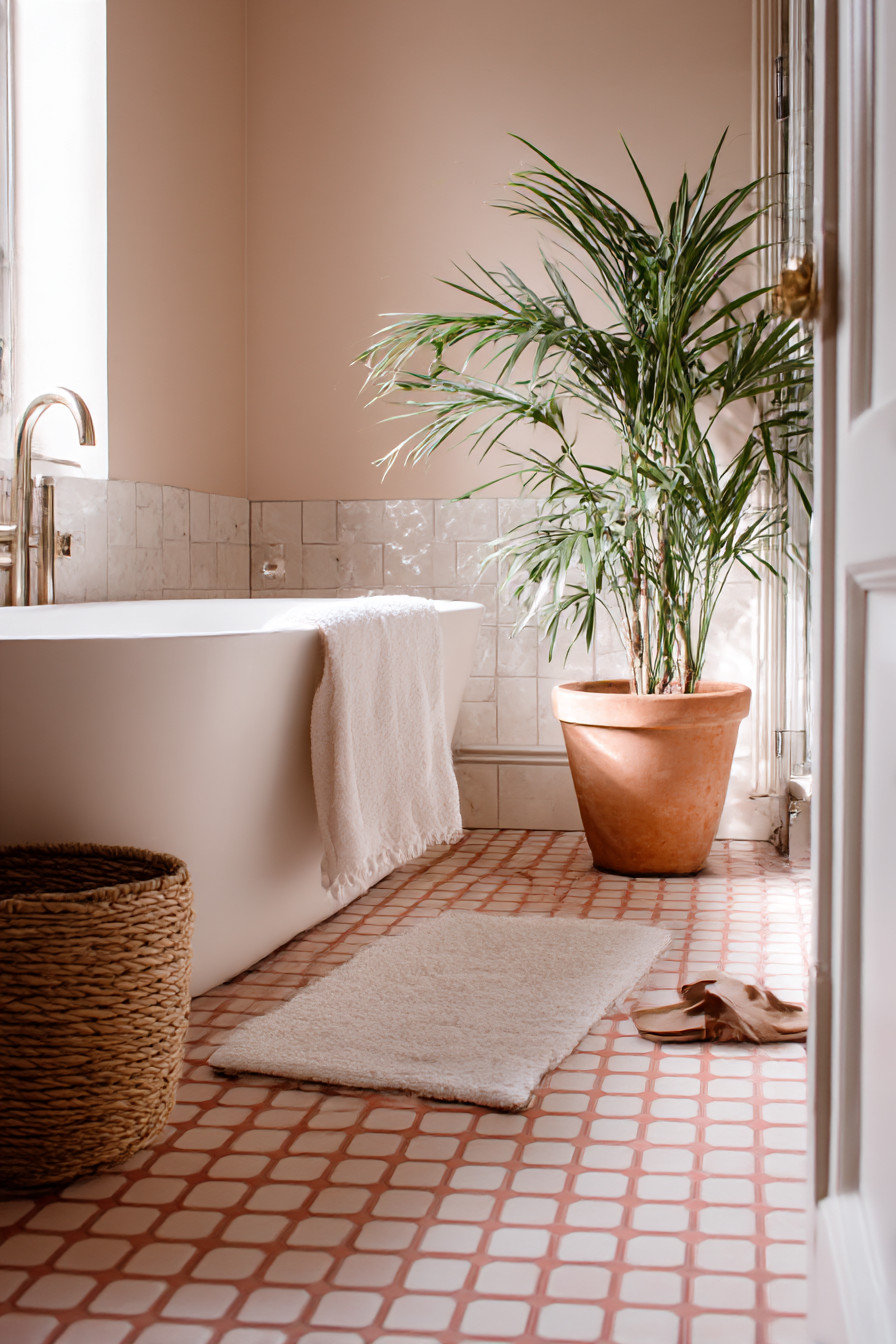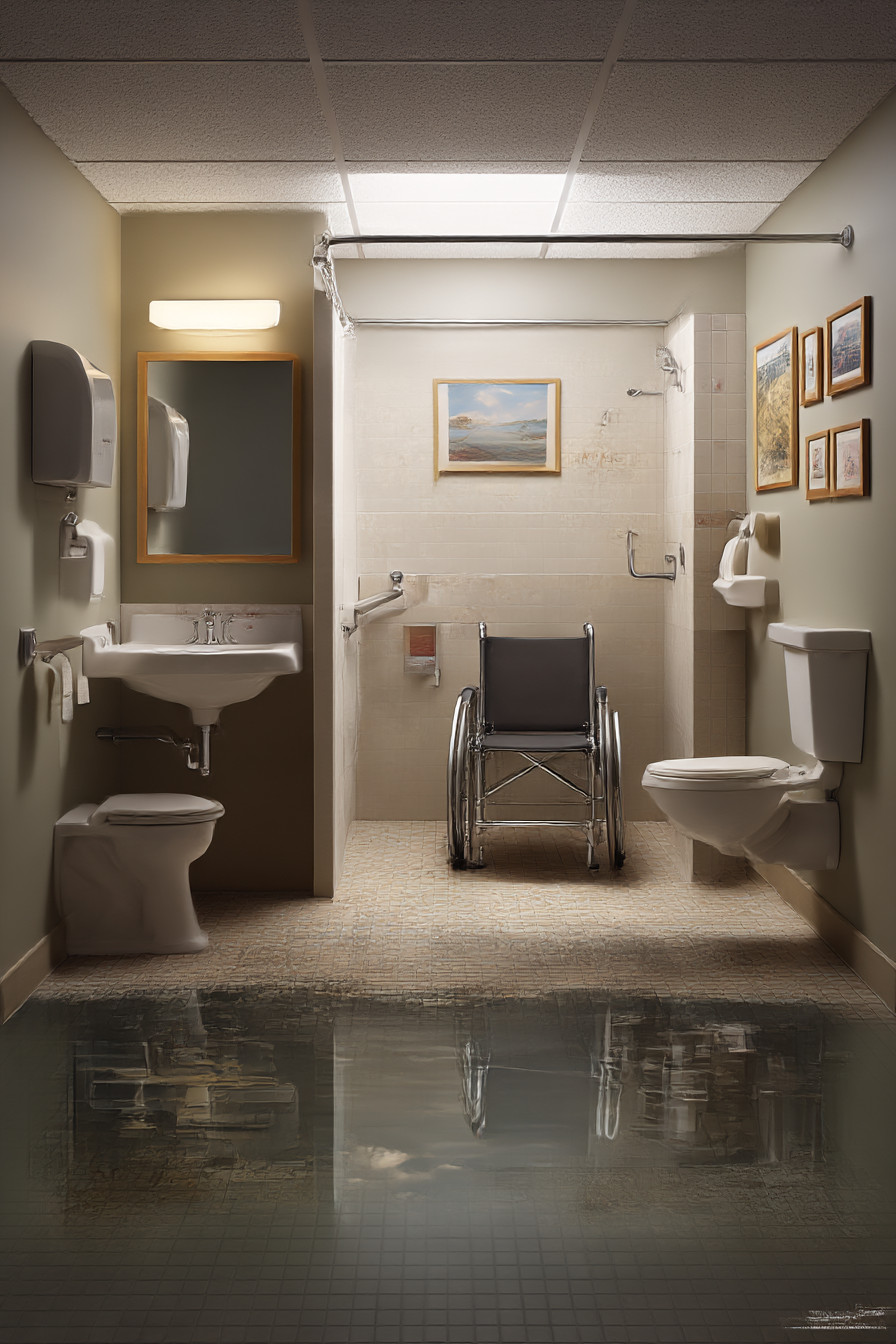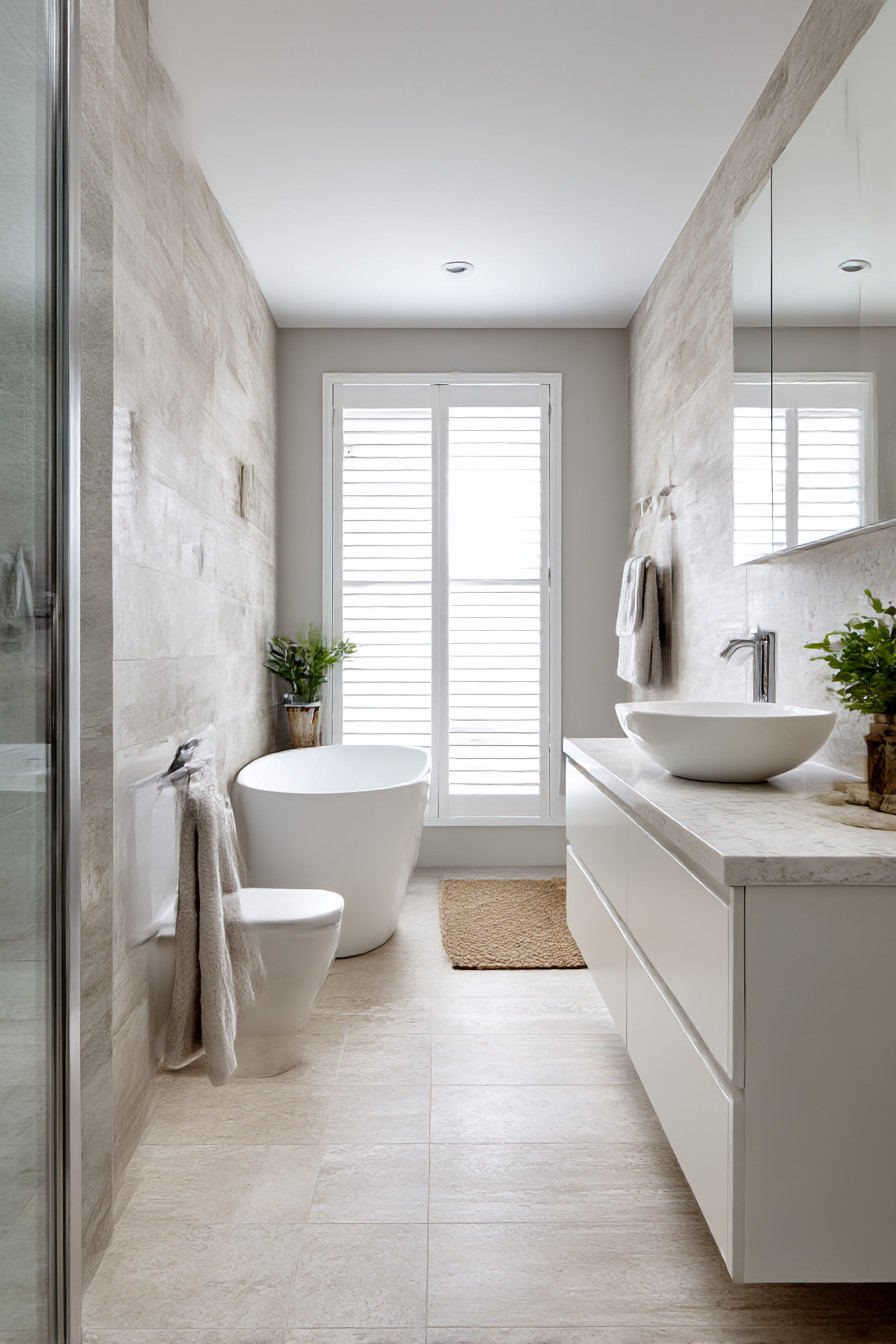
I was simply scrolling through Houzz at 11 o’clock at night, wrapped in a towel because our shower door had totally given up. Do you ever get that moment when you realize you have been accepting something ridiculous for far too long? That was me, standing in a puddle on the bathroom floor, and watching as the water poured down the wall and onto the floor.
Our bathroom was… well, being called “old” would be a bit of an understatement. Honey oak cabinets from the late 1990s / early 2000s, beige tiles that showed every drop of water that fell on them, and a vanity light that cast the worst possible shadow on my face. I had lived with this for 3 years thinking I would “do it sometime.” Apparently, that sometime was tonight — at 11 pm — while wearing only a towel and a determination to fix it.
The thing about Houzz is that it makes everything look attainable until you begin to think about the costs involved. I saved around 50 pictures that first night—marble waterfall countertops, a rainfall showerhead the size of a plate, a floating vanity that appeared to defy gravity. My Pinterest board quickly became a fantasy world where money didn’t exist and contractors arrived promptly.
However, I discovered that the goal of those inspirational photographs wasn’t to replicate them exactly. They are intended to spark creative ideas that you could modify to fit your needs. That $4000 brass rain shower? Perhaps not. However, the idea of installing a larger shower head at a slightly different position? Absolutely doable for a $200 upgrade and some plumbing modifications.
I printed the Houzz images that I liked the best and scattered them across my kitchen table like I was planning a heist. My neighbor Sarah (who had recently navigated her own renovation disaster) came over with wine and harsh realities. “That one’s great,” she said, gesturing toward a dark, black-and-white photo of a bathroom, “but you’re aware that you have no natural light in that room, right?”
Sarah was correct. Our bathroom has one small window facing north. Those moody, dark walls I was obsessed with would have transformed my morning routine into a cave expedition. As such, I began to look at the photos in a new light – not as examples to copy, but as groups of ideas to steal creatively.
Subway tile in various shades of marble caught my attention in dozens of photos, but a true piece of Carrera marble would have eaten through my entire budget to install on the shower surround alone. Rather, I located porcelain tiles that resembled the same look for approximately 1/3 of the price. They photograph remarkably similarly, and honestly? They may even be better suited for my lifestyle. I do not have to worry about staining the tiles with red wine, or acid-based cleaners damaging the natural stone.
One of the Houzz bathrooms featured an incredibly elegant floating vanity with embedded LED lighting beneath. The illuminated effect was spectacular, but the custom millwork required to create this fixture would have cost more than my car. My alternative? I purchased a wall-mounted vanity from IKEA and installed battery-powered LED strip lights underneath. Difference in total cost: approximately $2,800. Similarity in overall effect: nearly identical, especially since I will be brushing my teeth in the 7 am morning light.
The planning phase lasted me three months, which I thought was absurdly long, but ultimately spared me a multitude of costly missteps. I would take screenshots of individual details from the multiple photos – the manner in which subway tiles were laid in a herringbone design in one photo, the positioning of the brass hardware in another photo, the exact color of the grout that enhanced the appearance of white tiles in yet another image.
When I presented my Houzz file to my contractor, Mike (whom I had previously hired to complete my kitchen backsplash), he was initially dismissive. “These look expensive,” he cautioned. But once we broke down each component, determined where to spend the money and where to cut corners, he became excited by the challenge.
We spent a considerable amount of money on the shower fixtures – a thermostatically controlled valve that actually retains a consistent temperature and a handheld wand that greatly improved my ability to wash my hair. The Houzz photos had educated me on the fact that good water pressure isn’t merely a luxury item, but rather a functional necessity. For the past two years, I have been grateful for that decision.
Lighting was also an area in which Houzz photos served as a guide for my selections, but financial constraints influenced my implementation. Rather than purchasing the $800 sconces I had bookmarked, I discovered comparable fixtures at a lighting store for $150 each. The critical factor was ensuring that the fixtures were proportional to the mirror – if the fixtures were too small, they would appear puny; if they were too large, they would overpower the mirror.
My greatest Houzz-inspired achievement was the niche in the shower. A myriad of photos displayed these built-in storage compartments that seemed seamless and sophisticated. Mike was able to create a similar compartment during the framing phase at a relatively low increase in cost. This niche contains the shampoo bottles without cluttering the surrounding space, and every single user of the shower compliments us on its convenience.
It took six weeks to complete the job, which felt like six months when I was taking showers in our basement bathroom (essentially a concrete box with plumbing). When it was completed, however, and I entered that space, turned on the perfectly placed lighting, it felt as though I had transported one of those Houzz photos into my reality.
The brass drawer pulls I had agonized over for weeks were reflecting light in the precise manner in which I desired. The subway tiles were reflecting the morning sunlight in a manner that created the illusion of a larger space. The vanity was precisely the optimal height for both myself and my spouse based upon the measurements I had taken obsessively in anticipation of potential back strain issues.
Two years later, I find myself frequently admiring specifics within that bathroom. The way the grout lines create geometric symmetry. How the reflection off the mirror creates illumination throughout the space. The pride of having adequate storage that actually functions properly, as opposed to merely appearing attractive.
Those Houzz photos educated me on the reality that renovating is not about replicating someone else’s visual inspiration precisely – it is about identifying what aspects of a space make it function effectively and aesthetically pleasing, and determining how to achieve those characteristics within your own fiscal limitations. At times, that means allocating greater amounts of money to items that provide value to you on a daily basis, and lesser amounts of money to items that are visually appealing but do not provide significant value to you.
My recommendation? Save all of those wonderful photos. Then ask yourself what specifically drew you to each of them. Generally speaking, it is not the $10,000 marble that attracts you – it is typically either the manner in which light is captured by the surface, or the elegance of the lines, or the organization of the space. These characteristics? You can certainly develop these qualities, regardless of your budget.