Have you ever walked into a bathroom that caused you to breathe out as though you’d been holding your breath all along? That happened to me, three years back, when I visited my friend Anna’s flat in Copenhagen. While her bathroom was small — roughly six feet by eight — it still managed to feel like a combination of a spa and your grandmother’s cleanest linen closet.
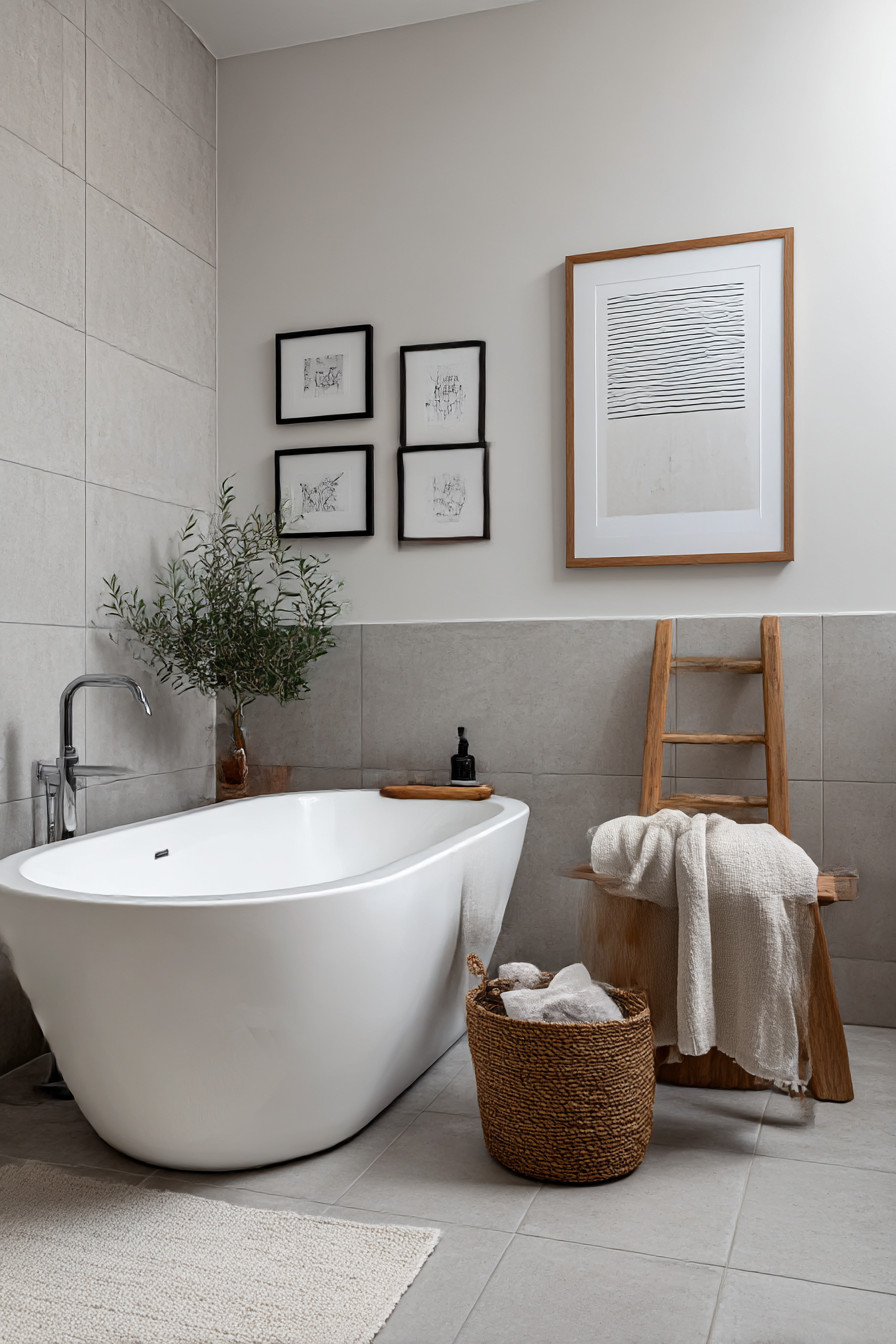
The walls were a soft grey color — almost-but-not-quite a gray that makes you wonder how anyone can see. The walls seemed to expand the space, making it appear larger than its dimensions. On top of the sink sat a reclaimed piece of birch wood as a floating shelf. It held a small potted snake plant and two rolled white towels. The floor was large, pale stone tiles that felt warmer than they were upon standing (she would explain to me later that heated floors were an absolute requirement in the winter in Denmark). All of these elements blended together to produce a sense of calm. Yet I knew that there was no accident involved in creating such a sense of calm.
That visit created the idea. Upon returning to my own cramped rental bathroom — complete with builder grade fixtures and a mirror that made everyone appear slightly yellowish in hue — I began to notice what made Anna’s space function. It wasn’t expensive fixtures or unique tile designs. In fact, it was the opposite. She had selected fewer items, better quality items and colors that did not fight for attention.
The Scandinavian method of designing bathrooms does not involve some sort of strict formula. It is more akin to …well, imagine you are editing a paragraph filled with clutter until only the essential words are left. However, the entire thing will read more beautifully than the original. Each component is necessary; none are fighting for attention; and the entire space simply breathes.
White will become your best friend in this type of design. Not the bright, harsh, hospital white that causes you to wince. I am referring to warm whites. The color of freshly laundered linens or old laundry that has been washed numerous times. After testing twelve different “perfect whites” for their ability to appear perfect in the morning light, afternoon shadows and under artificial lighting, I decided to purchase Farrow & Ball’s Pointing. Yes, it was expensive, however it was the only color that actually appeared perfect. The difference was subtle yet tangible — as though the space had been lightly dusted with something softer than paint.

Natural wood provides the warmth that prevents white from appearing sterile. I purchased a piece of reclaimed oak from a salvage yard for thirty pounds — originally part of a Victorian school desk with ink stains and pencil marks. My partner thought I was insane. After sanding it down and applying Danish oil to it, it is now my bathroom shelf. Those old imperfections now seem intentional, as though the wood has stories to tell.
The wood does not need to be flawless. In fact, Scandinavia understands that life leaves its mark on things and those marks can be lovely. A small water stain on your wooden stool? That is character, not damage. A small nick in the frame of your birch mirror? Evidence that humans truly inhabit your space, not magazine photographs.
In a Nordic bathroom, storage is often clever yet unobtrusive. Niche spaces are built into shower walls. Drawers slide softly on soft-close hinges. Medicine cabinets sit flush against the wall. Inside what was once a meaningless alcove next to our shower, I installed three narrow shelves. They hold everything we actually use — shampoo, soap, a single candle — without announcing themselves.
My earliest misstep in trying to achieve this style was assuming that minimalist equaled cold. My initial foray into this style produced a bathroom that resembled a dental clinic. Too much white, too little texture, too many places for your eyes to wander without resting. I forgot about softness — a thick bathmat that warms your feet on cold mornings, linen curtains that filter harsh light, a wooden bath caddy that cradles your book and wine glass during extended soaking periods.
Lighting transforms a Nordic bathroom. Overhead lighting is harsh. Instead, consider layering: a window draped with sheer fabric to allow in as much daylight as possible, LED strips embedded behind mirrors for functional lighting, possibly a simple pendant light with a fabric shade for evening hours. I installed dimmers on every fixture since no one wishes to be awakened by blinding light at 6 AM.
Consider the shower area separately. The large format tiles in pale grey or beige require less grouting (trust me on this — I have scrubbed my fair share of small white grout lines). A single glass panel as opposed to a full-enclosure maintains the view. A showerhead should be sturdy, but simple. Chrome or brushed steel finishes are ideal. I selected a rain showerhead that makes each morning feel slightly ritualistic.
Plants add life to the pale, monochromatic space. Just make sure to select wisely. A snake plant is a great choice for a bathroom with limited natural light and high humidity. Small pothos vines trail nicely from higher shelves. If your bathroom receives sufficient natural light, a peace lily brings elegant greenery to your space without requiring constant care. I killed three different plants before realizing that my bathroom receives approximately 47 minutes of direct sunlight per day. That severely limits my options.

Textiles may play a bigger role in this style than you realize. White or natural linen towels provide a luxurious and visually appealing image. However, they will show every blemish. (I learned this the hard way after my initial set developed a permanent grey hue in approximately 2 months.) Today I select oatmeal or soft grey. These colors look deliberately Nordic while masking the reality of your daily use.
The true secret to this design style is not any singular element. Rather, it is restraint. Every Nordic bathroom I have admired has adhered to this rule: if something will not either assist you in your daily routine or genuinely delight you, then it likely shouldn’t be present. That decorative soap dispenser that is always slightly sticky? Gone. The accumulation of nearly empty containers encumbering your shower? Either consolidated or eliminated.
This philosophy compels you to prioritize quality over quantity. Initially, this means investing in products that will endure longer. As opposed to continually purchasing inexpensive, disposable accessories every few years, you acquire items that mature with time. Your wooden stool develops greater beauty with use. Natural stone tiles develop a patina that creates additional aesthetic appeal, whereas it previously merely represented wear.
Creating a Nordic-inspired bathroom is not a process of acquiring every item anew. It is about selecting the most important components of your space and eliminating everything else. Ultimately, it is about selecting the items that make your space both aesthetically pleasing and functional – a space from which you begin and conclude each day feeling marginally more human.