Well, I have to tell you about the instant I realized I had simply missed the boat on powder rooms. I had gone to my friend Emma’s place for her birthday bash last month and I went down to the downstairs loo. I expected to walk into the typical magnolia wall space with a simple mirror. What I saw instead was essentially a miniature masterpiece – the walls were covered in a beautiful dark green botanical print, the faucets were antique-looking brass ones that seemed to have been stolen from some high-end Victorian Hotel and the soft lighting created a sense of warmth that made me feel cozy in such a tiny space.
I stood there for so long admiring it that it probably appeared odd to anyone watching. However, I couldn’t stop staring. The experience was similar to entering a hidden garden, only one that was approximately the same size as our previous airing closet. At that point, it hit me – powder rooms are essentially the “statement earring” of home design. They’re tiny; they aren’t tasked with managing all of the clutter associated with your primary bathroom (i.e., no rows of shower gels or towels strewn across the floor); and every guest who enters your home will see them. And yet, here I was — someone who spent months agonizing over finding the perfect color for our living room, and I pretty much disregarded our downstairs loo. Beige walls and a mirror purchased from B&Q, which was the least expensive light fixture available since “nobody pays attention to it.” Oh man, I cringe just thinking about it now. Functional yes. Memorable — only in terms of how aggressively uninteresting it was.
Anyway, I came to realize that powder rooms provide a great opportunity for you to be bold without committing yourself to being entirely crazy with your entire home. For example, you’ve always loved that paint color you wouldn’t dream of using in your bedroom because you think it may be “too much”? Perfect for a tiny loo. There’s that wild wallpaper that has caught your eye online multiple times but you’ve never dared to purchase it? Great choice for a space where individuals spend only 2 minutes at a time.
When we finally renovated our loo in earnest, I decided to go totally in the opposite direction. I painted the entire area in a beautiful terracotta hue called Farrow & Ball’s Red Earth. This color cost an arm and leg ($$$) and I rationalized purchasing it because you only need one can for an area that is only 15 sq. ft. In his typically diplomatic manner, when he viewed the newly decorated loo for the first time and observed, “Isn’t it sort of…orange?” Danny obviously wasn’t impressed. Nevertheless, I believe that bold colors in confined areas work very differently than you’d anticipate. As opposed to making the area seem smaller, it creates a lovely feeling of intimacy particularly when you get the lighting correct.
As for lighting — that’s another huge mistake most people make. Those standard bar lights used in bathrooms? Completely dull. I stumbled upon an incredible vintage-style sconce at a local garage sale for $15 — needed to rewire it which Danny ended up doing himself because I’m afraid of electrical work following my kitchen faucet disaster — and it completely changed the ambiance of the space. The soft lighting reflecting off the terracotta walls creates an incredible sunset effect that makes everyone appear approximately 10 years younger.
Another major opportunity that many people overlook is mirrors. Rather than another rectangle-shaped mirror, I scoured thrift stores until I located an old brass porthole mirror for $8. Although it has some aging around the edges which normally would irritate me, in this small area, it provides character without appearing as though you are trying too hard. Additionally, the circular shape breaks up all of the straight lines from the vanity and doorframe.
Something else I call “surprise elements,” are essentially minor features that visitors won’t necessarily notice, however will undoubtedly recall. When assisting my brother in decorating his powder room (which his girlfriend had complained about for months), we installed some floating shelves in an odd shaped corner and accessorized them with a few small plants, some nice hand soap, and several vintage glass containers I had acquired during various trips to thrift stores. Total cost was likely less than $25 including the shelves from IKEA, but it converted an otherwise useless corner into an area that appeared intentionally designed.
In case you have any amount of natural lighting in your loo, plants are wonderful additions. My little Pothos plant on the windowsill is doing wonderfully well despite occasionally receiving a splash from the sink. If you are unfortunate enough to have no windows like we did in our previous apartment, consider either a Snake Plant or a ZZ Plant — both are virtually indestructible and add a fresh and organic quality that prevents an area from seeming too sterile.
Okay, okay, let’s talk about what doesn’t work. I have made some real mistakes during my attempts at designing a good loo. One time, I attempted to install a teeny-tiny chandelier because I had seen one in some upscale magazine and thought it looked super glamorous. Big Mistake. Too small for the space; too ornate; and every time someone used the space they felt as though they might bump their head on it. Unfortunately, sometimes magazine photographs simply do not translate to reality with average ceiling heights. Eventually swapped out the chandelier for a simple pendant light and things worked out much better.
Another often-overlooked detail regarding hardware is how much more important it is than you’d imagine. We replaced all of our cabinet pulls and towel rack with these matte black fixtures — approximately $40 from Amazon — and the contrast against the terracotta-colored walls appears extremely expensive. It is another of those changes that appear to be expensive but ultimately aren’t — although I did mess-up the first shipment due to not measuring correctly prior to ordering — ended up with handles that were ridiculously large which forced us to wait another week before returning them.
The flooring issue can be challenging because you want the flooring in your powder room to tie-in visually with the rest of your home while simultaneously providing visual interest. I retained our original tile floors (to my surprise, they weren’t bad once I stopped ignoring them) but included a gorgeous vintage-inspired rug which can also be washed in a washing machine should it become dirty. Adds a softer touch to the space and includes another layer of pattern without permanently altering anything.
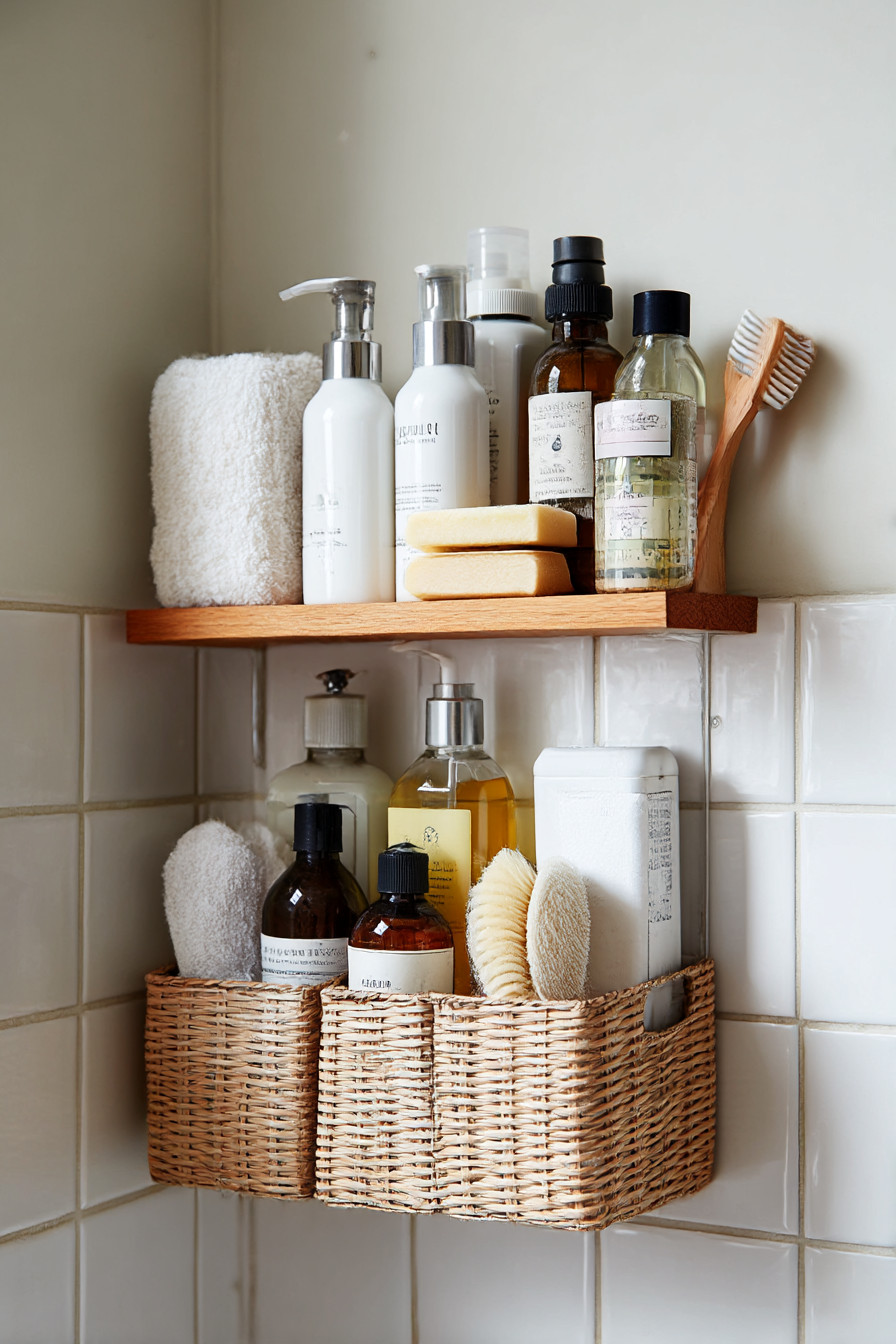
Storage in a half-bath is usually limited which is actually liberating when you think about it. I have one small wicker basket underneath the sink for toilet paper and miscellaneous cleaning supplies — end of story. No bottle-filled medicine cabinets or overwhelming numbers of shampoo bottles covering each surface. Compared to our upstairs bathroom which looks like Boots exploded most of the time — ours feels almost serene.
If I am being truthful about something I wish I had given more thought to when renovating our powder room was the positioning of the toilet paper holder. Initially mounted it lower than ideal because I hadn’t given much thought to its position, which caused me to consistently whack it with my elbow. Relocating it necessitated putting new holes in the drywall, painting over them and overall — just a hassle, but these functional details are far more important than any glossy magazine article would lead you to believe.
Powder rooms feel like tiny treasure chests — spaces that surprise and delight without appearing overly deliberate. While powder rooms do not require matching your entire home precisely, they are better off when they do not attempt to match your entire home exactly. Powder rooms allow you to experiment; allow you to be bold; allow you to create moments of unintended joy within someone’s day. After all, if you cannot be bold within a 15 square foot space — where can you be?