I began to understand how a place could look okay — even good — but somehow feel wrong. We’d done everything right. Torn up that awful, still-hard-to-believe-they-did–it bathroom carpet; painted the walls; installed a halfway-decent shower. The entire bathroom area was much nicer than the 1980’s monstrosity we’d inherited from the last owner.
But it felt…empty? Sterile? As if walking into a show bathroom at B&Q where everything was precisely placed, yet no one really uses the space. My girlfriend said it looked great, and it did, but I just couldn’t shake the feeling that we were missing something important.
That realization hit me one morning while I was hurrying to get ready for school. I’m working year 9 first period, which means you’re already scrambling mentally from the minute you wake up. I’m trying to brush my teeth using some random mug we nicked from the kitchen to hold my toothbrush, pressing soap out of some flimsy plastic soap dispenser you buy from Tesco, and I just think — this is silly. We spent months deciding colors for painting and researching bathroom fixtures, and then finished the job with whatever random junk we had lying around.
You might say that it was similar to purchasing an extremely comfortable sofa then draping a nasty, worn-out throw over it and calling it “styled“. The basic structure was here, but none of the elements that truly give a space a lived-in and personal touch.
So I decided to pay closer attention to the things we actually use each day. The soap dispenser was squeezed approximately twenty times per person during our morning routines. Washing hands. Brushing teeth. Every single squeeze of the dispenser was this inexpensive plastic contraption that resembled something you would find in a gas station restroom. Additionally, the mechanism in the dispenser was questionable. Most of the time, you had to push very hard for anything to come out. Then, you would continue to apply pressure until too much soap came spilling out.
We replaced it with a ceramic soap dispenser that was a shade lighter gray than our wall color. This warm gray was one of the many hues we agonized over for days/weeks because I thought it would make the bathroom look too dark due to its small size. It cost about thirty pounds — which seemed ridiculous for something that simply dispenses soap — however, immediately upon replacing it, the appearance of that area of the vanity changed dramatically. Instead of having the impression that we had carelessly tossed whatever was available in that corner of the vanity, it appeared to be an intentional part of the design.
Our toothbrush situation was significantly worse. The mug wasn’t fooling anybody, and we consistently knocked it over because mugs weren’t intended for bathroom countertops. We located a suitable toothbrush holder with individual compartments and nothing extravagant, however, it looked as if it belonged there. Surprisingly enough, something as straightforward as this had a huge effect on how everything else within the bathroom looked.
This is when I nearly messed up — I walked into John Lewis with good intentions and almost purchased a complete bathroom set that consisted of matching items. Those are the type of products that match your soap dispenser, toothbrush holder, etc., and I can easily comprehend why individuals opt for them when attempting to rapidly organize a bathroom. However, they appear to be so…catalogue-like? Similar to selecting check marks on a form rather than selecting products you actually enjoy.
In order to avoid this issue, I opted to mix-and-match products. We maintained the same color palette, although utilized different types of materials — ceramic for soap/toothbrush holders and glass for jewelry for my girlfriend (her ring often falls off when washing her hands and she forgets exactly where she puts it) along with a bamboo container for cotton balls/pads ($3 from TK Maxx).
The towel bars were driving me crazy as well. The original towel bar installers obviously did not take into account how individuals utilize bathrooms. The hand towel was directly adjacent to the sink where it received constant splash damage. And the primary towel bar was situated at an odd angle where you would inevitably spill water on the floor when reaching for towels after a shower. These were basics, but they caused the entire room to seem awkward to use.
Changing their position was a real chore — I had to fill in the holes from the previous installation locations, paint again, and drill new holes. I completed this task over a weekend when I should have been grading Year 8 geography assignments. Honestly, it was more fun than reading thirty identical essays about coastal erosion. The new placement makes far more sense than before, and I upgraded the finishes slightly to something warmer that complements our ceramic accessories nicely.
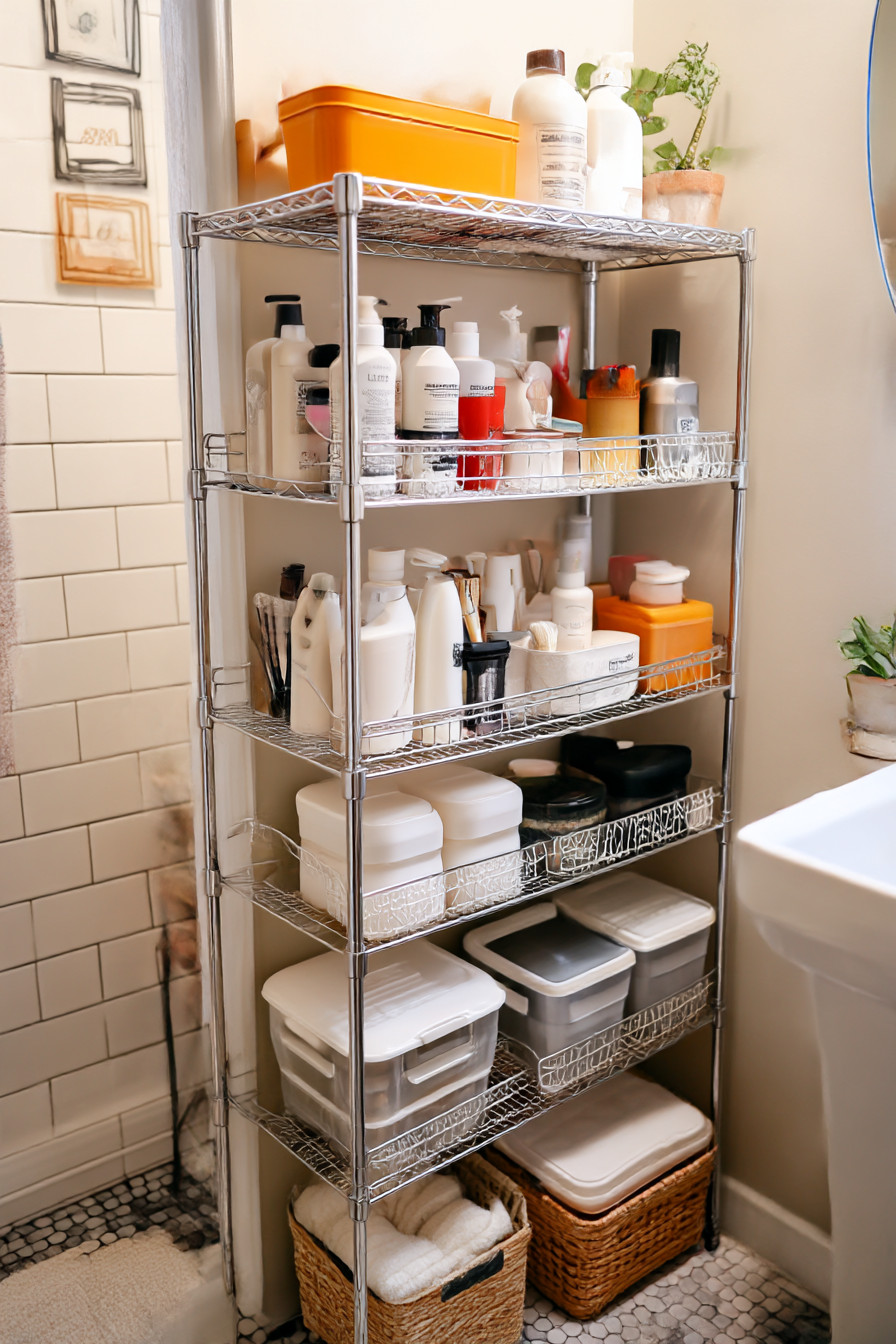
Storage presented another challenge. Our bathroom is tiny – most Victorian conversion flats contain bathrooms created from what used to be closets or other spaces. Once you begin placing your actual essentials on your counter space, it vanishes quickly. I didn’t desire all of our essentials stored away since then you’ll continually be opening cabinets; however, I also didn’t wish for everything to appear like Boot’s exploded in there.
Ultimately, I chose to create a small wooden shelf above our toilet. I know — I know — over-the-toilet storage is a contentious subject. My mother believes it is disgusting and continues to discuss bacteria/hygienic issues. Nevertheless, when you possess roughly four sq ft of floor space, you will utilize whatever you can obtain. I painted it to blend with our wall color so that it appears as if it belongs there rather than being stuck-on. Also, I am cautious regarding what I store on it.
My girlfriend suggested placing a small potted pothos plant at one end of the shelf. At first, I thought this was absurd since I kill everything green that approaches me. Nonetheless, apparently bathroom humidity is ideal for plant growth, and this plant has thrived beyond my wildest dreams. The presence of the plant softened all of the sharp angles and rigid surfaces in the bathroom and helped provide a more peaceful atmosphere throughout the space. Plus, plants have a way of making you feel like a legitimate adult who possesses their life together.
Lighting was also bothering me. We retained the existing ceiling fixture because it functioned correctly and we wanted to save money — teacher salary + mortgage = limited funds for superfluous upgrades. However, it’s somewhat harsh — particularly when you’re stumbling through the darkness in search of a non-sleep-inducing bathroom visit.
I discovered some battery-operated LED strips that attach underneath our vanity unit which provide this subtle ambient light that is far more gentle during nighttime bathroom excursions. No electrical work required — which is excellent news since I have no qualifications related to messing with bathroom wiring. They cost approximately twenty dollars and greatly enhanced the overall ambiance of our evening routines.
The total transformation likely cost less than $150 and consumed several weekends — primarily due to my continuous questioning of my selections and rearrangement of items within the bathroom. However, the outcome was substantial — our bathroom instantly felt like “our” bathroom rather than merely a functional space we happen to occupy.
Most surprising to me was how these minor adjustments influenced our daily routines. Utilizing attractive fixtures provided an additional level of pleasure to ordinary tasks — essentially providing a pleasant experience rather than an automatic experience. Similar to the difference between consuming meals off paper plates vs. fine china — same meal / entirely different experience.
Although our bathroom is still not ideal — the tile surrounding the tub is slightly wonky where we performed them ourselves and there’s a stain on the paint by the door that requires repair — our bathroom feels finished now and lived-in as opposed to merely functional. On occasion, it is indeed the smallest details that contribute toward creating an environment that feels like home as opposed to merely somewhere we keep our belongings between work commitments.