You will never fully appreciate the frustration of being only half-awake and searching for your phone charger while simultaneously attempting to fold yourself into a human pretzel to reach the outlet due to the fact that your bedside table seems to be a million miles away or has created a minefield in your bedroom. I lived with this same experience for approximately 8 months while residing in my Chorlton flat. I was stubborn in admitting that my furniture decisions were simply terrible.
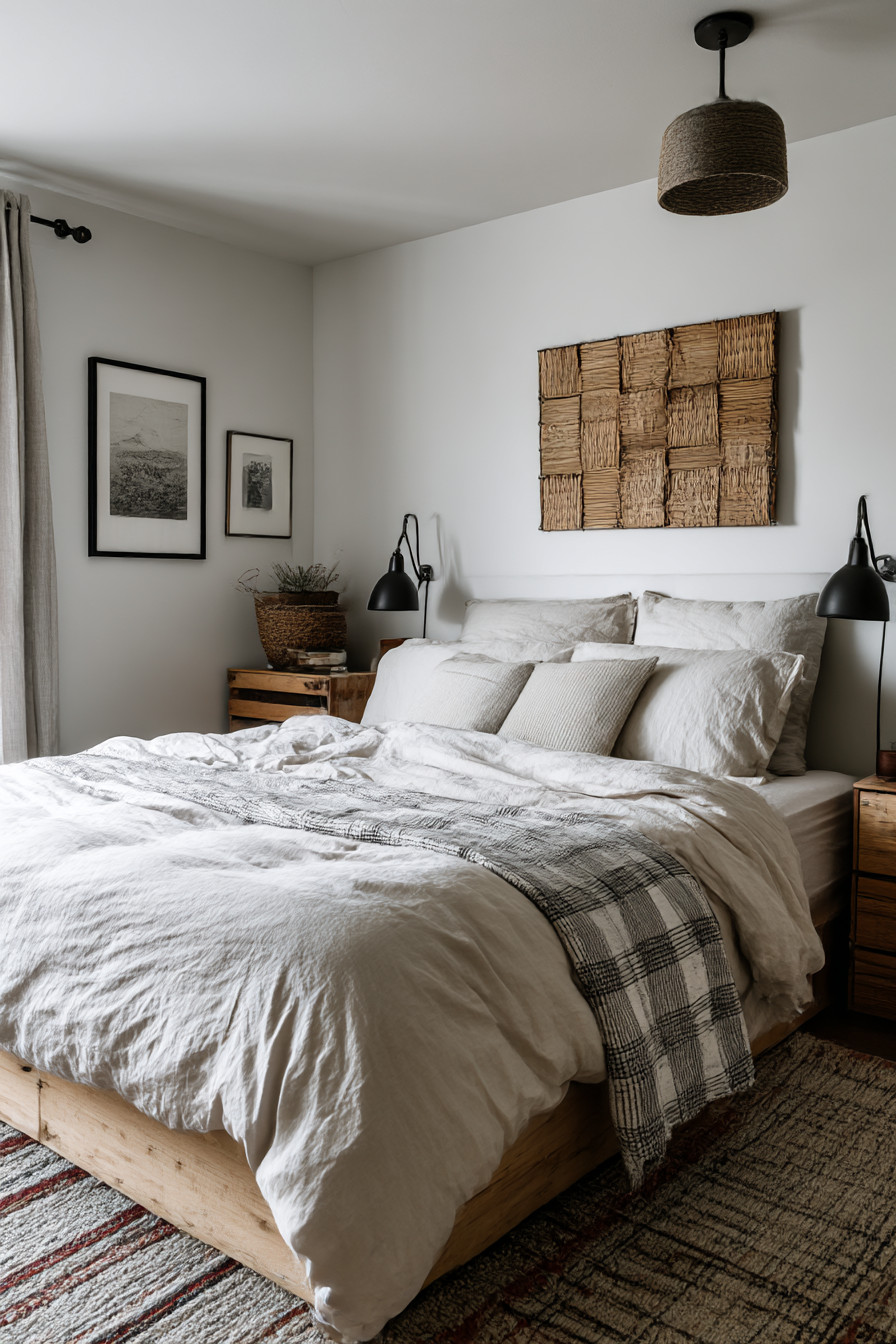
My bedroom is described as “efficiently-proportioned” by the estate agent that sold me the flat (which is essentially another way of saying you will feel like you are living in a sardine). It measures approximately ten by eight and a half feet, and contains a double bed that leaves less than twenty inches on each side. I ended up measuring it myself with a tape measure to determine why I kept hitting my shin on the edge of this large bedside table I purchased without realizing it. That sounds familiar; I typically look at furniture at IKEA and say “wow, that looks sturdy”, without taking into consideration the fact that it is essentially a small chest of drawers disguised as bedside furniture.
This piece of furniture is constructed like a tank. Which initially seemed wonderful. Made of solid pine, lots of storage, appeared mature, responsible and adult. However, using it as a bedside table? Total disaster. The bedroom felt like I was sleeping in a warehouse filled with furniture. And getting to my closet required me to perform a silly sideways dance every morning. My then-girlfriend told me it looked like I planned to store a small library next to my bed, which wasn’t entirely wrong.
Locating a new bedside table quickly became an odd fixation. You’d think it would be easy – just purchase a smaller bedside table and you’re done. However, most furniture stores appear to believe that everybody lives in enormous Victorian homes with large rooms. All of the bedside tables available were either extremely bulky or resembled tiny stools that would fall apart if you placed anything heavier than a paperback book on top of it. I wasted far too much evening browsing various furniture retailers’ web sites, becoming increasing frustrated with the total lack of practical options.
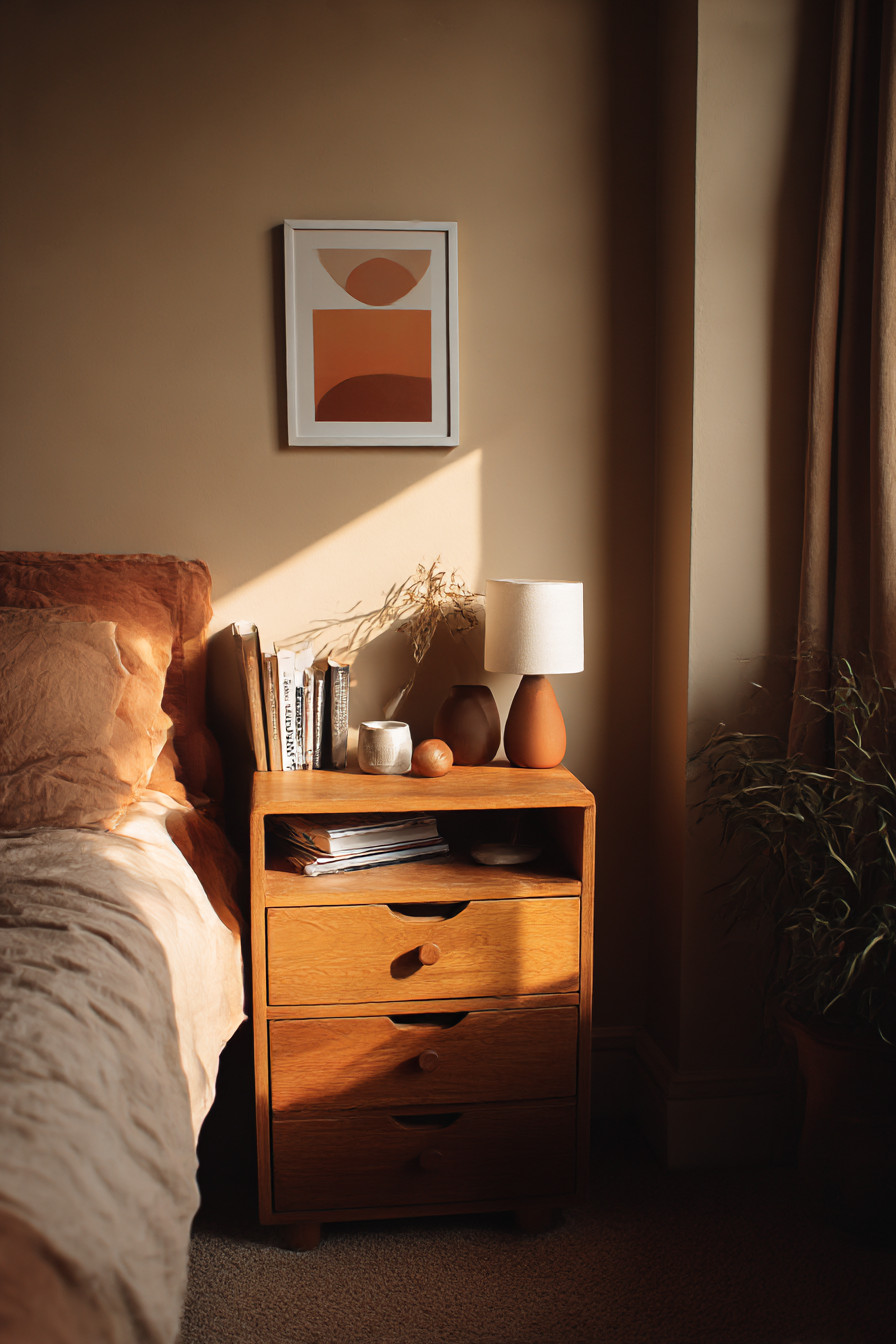
I stumbled upon the solution when I decided to stop looking for “bedside tables” and begin searching for narrower console tables instead. A completely different category, however, the size and shape worked so much better for my specific needs. Purchased this awesome console table from West Elm — their Penelope Night Stand in White Oak, even though I’m sure they’ll eventually discontinue it since they always do. The measurements are right-on: 24 inches wide, however only 8 inches deep, and 26 inches tall.
The 8-inch width is what totally changed things. Provides ample space — I can position my lamp, books, phone, along with a small container for my watch and wallet — but does not take up nearly half of the room. The single drawer is also unexpectedly spacious and allows me to stash miscellaneous items that previously littered the surface. Examples include charging cords, hand lotion, additional light bulbs etc.
Assembly was relatively painless although I did make the typical mistake of installing it at mattress height at first. Thought that would be the most convenient location. In reality when you are lying in bed reaching for something at mattress height means you are mostly guessing blindly. Broke my water glass three consecutive nights before I finally realized the error and elevated the entire unit by roughly four inches utilizing furniture risers that I already had stored somewhere in my house. That works much better — high enough so I can actually identify what I am reaching for but low enough so I don’t have to completely raise myself off the bed.
The thin profile eliminated the obstacle altogether regarding having enough space to walk past the old table. Prior to this I would literally have to turn sideways and push past the massive table whenever I needed to access my wardrobe or window. Currently I have sufficient clearance — not super spacious, but I am able to walk normally without performing the furniture shuffle. Surprising how big of a difference a couple of inches makes when dealing with such limited dimensions.
From a storage perspective I was concerned that I would lose capacity, but ultimately this design forced me to become much more organized — which is likely beneficial. Rather than allowing items to collect randomly everywhere in the room, I now have to assign each item a designated home. For example, I utilize a wooden tray to corral smaller items, and honestly the overall appearance of the room is cleaner than my prior method of “just plop everything on top of the surface and hope for the best”.
In terms of style, I found surprising versatility. Due to the fact that the table does not overwhelm the visual aspect of the room, I was able to be a bit bolder with the lamp choice. Acquired a beautiful ceramic one from a local potter who informed me that it would have been absurd on the old bulky table; yet fits perfectly here. The proportions allow the lamp to remain the focal point, rather than compete with other pieces of furniture.
Additionally cleaning is significantly simpler. Since the original table dominated the space visually, vacuuming involved moving the bed, disconnecting the lamp, and creating a major ordeal of itself. The slender design permits me to easily navigate around and underneath the table with my vacuum without needing to move furniture.
While there isn’t much negative to report, perhaps the only drawback is that you cannot simply accumulate random stuff anymore. There is no longer enough space for items like books, mugs, loose change, and strange objects that somehow mysteriously materialize overnight. While perhaps somewhat unhealthy — at least from an organizing standpoint — it’s likely healthier as it compels you to consider what truly needs to be located near you versus what can reside elsewhere.
After six months, this represented one of those small adjustments that produced a larger-than-expected effect on both how the room feels and operates. Perhaps not revolutionary — but undeniably improved each day. At times solutions may not necessarily represent obvious answers — sometimes they’re merely those which function so well that you forget there existed an initial problem.