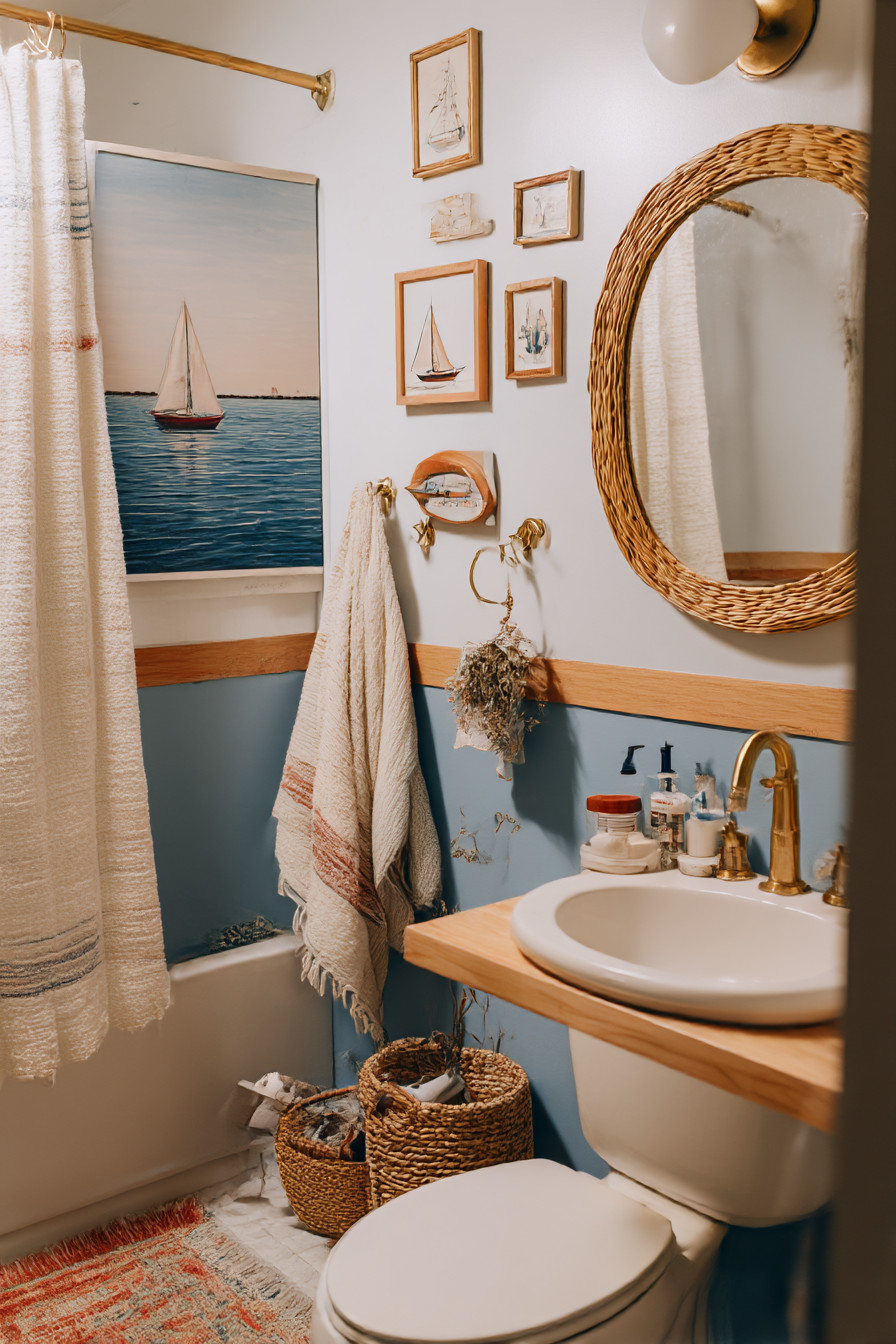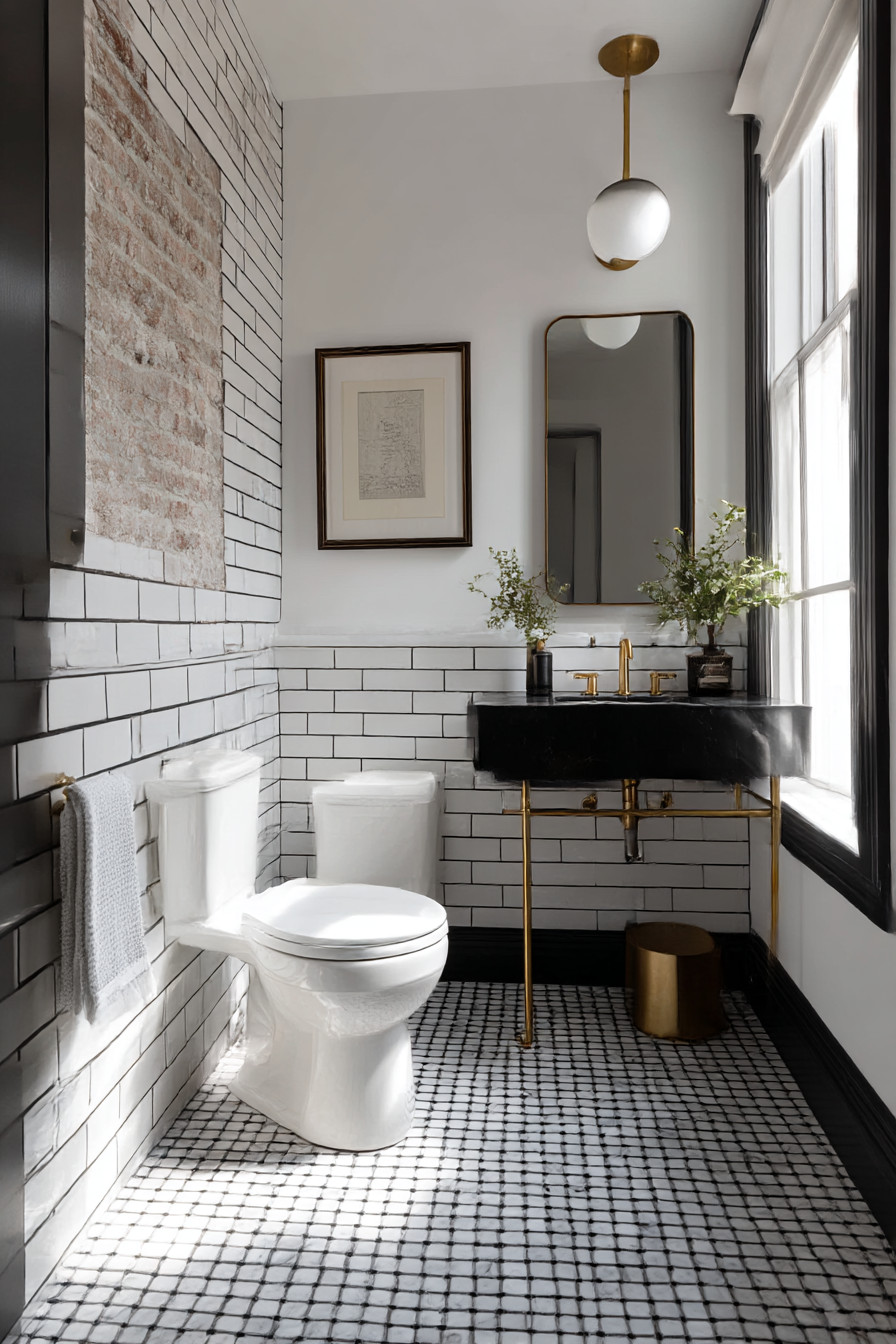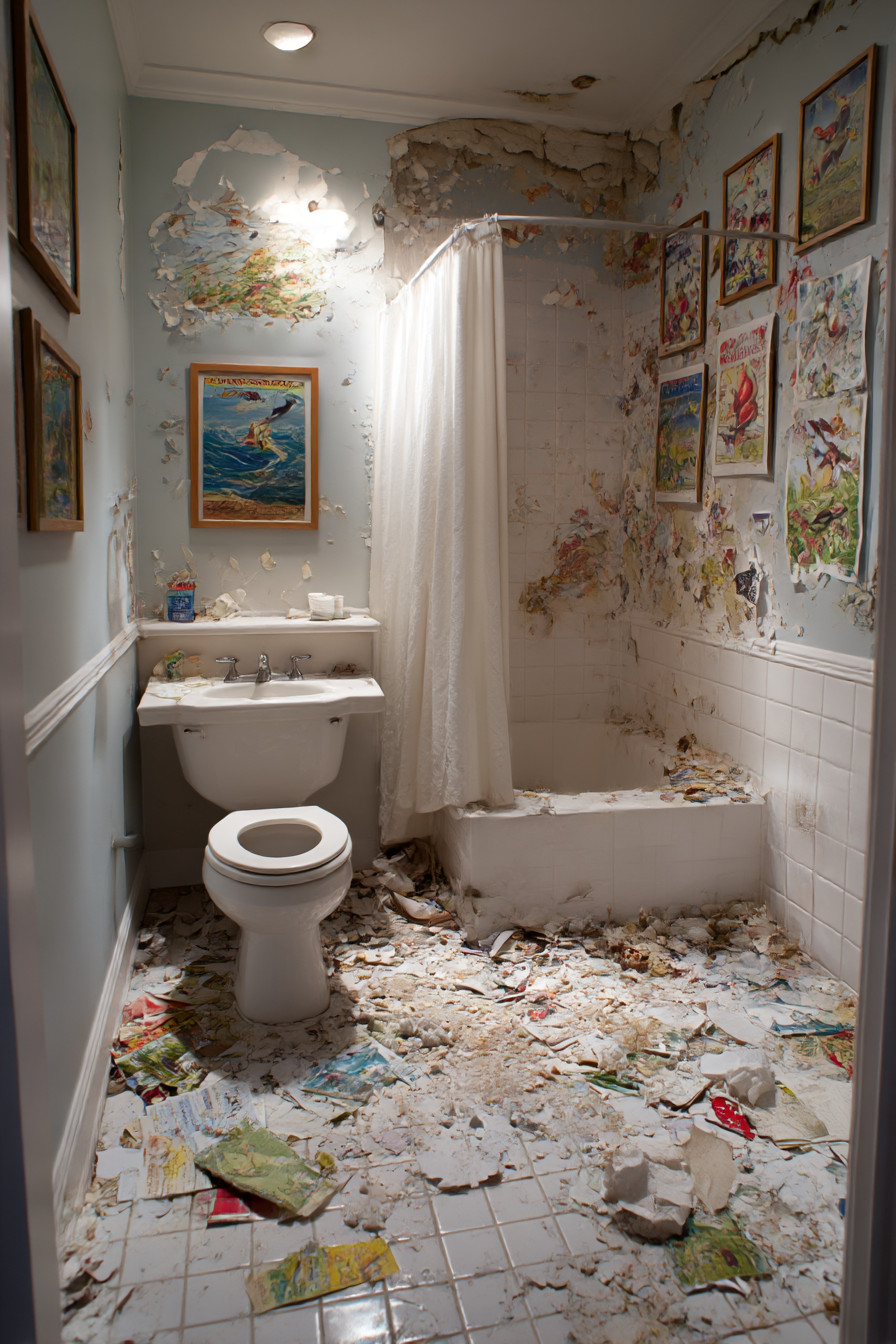
The first sign that you’ve messed up is when your kids start yelling at each other through the bathroom door. That happened to me when my wife’s niece brought her two children to visit for the summer — we thought she’d bring peace to our household; instead, she transformed our beautiful guest bathroom — complete with new white metro tiles and a cheap second-hand mirror — into a war zone of toothbrushes, tantrums, and constant noise.
That summer was a crash course in understanding the concept of shared bathroom space and I now think about Jack & Jill bathrooms very differently. On paper, Jack & Jill bathrooms are fantastic — they’re always depicted on idealized house plans — however, if you don’t plan them carefully enough, they become a total disaster. Over the last year or so I’ve assisted three families resolve problems related to bad shared bathroom designs, and I’ve developed a sense of what actually works versus what simply sounds great.
The biggest problem associated with the privacy aspect of Jack/Jill bathrooms is that most people get it fundamentally wrong from Day One. Pocket doors — the type that most builders include by default — aren’t worth the trouble. These doors provide zero acoustic insulation, never function well (they always jam) and eventually fail entirely (at which point you’ll likely find it impossible to replace the damaged part). I convinced one family to remove their pocket door and install real solid core doors with adequate weatherstrip along the edges. This cost them approximately £400.00 but solved their problem with argumentative screaming matches every morning in regards to the bathroom.
One piece of advice you may not see in those gleaming home magazines is that locks should allow access to enter/exit from both sides, but there has to be an option to bypass locks during emergencies. In terms of locking mechanisms we chose to go with Schlage Privacy Locks. They have a small emergency release button on the exterior side. When you inevitably get the high-drama “I’m locked in here and cannot escape” scenario, this feature has been a total lifesaver — provided that person can figure out how to operate a lock properly. A bobby pin usually solves this problem quickly.
Storage issues with kids are also a unique experience. Having equal space seems reasonable, but it is basically nonsensical. Kids use vastly different amounts of items, and attempting to put the same amount of storage space in front of each child merely causes more conflicts. So, I decided to implement what I call “Fair-but-Flexible Storage”. Each child receives individual medicine cabinets — specifically separate ones, NOT a combined mess — but the space underneath the sink is allocated based on the quantity of items used by each child, rather than some arbitrary split.
In particular, the teenage parents were excellent examples of this. The girl required significantly more drawer space to accommodate approximately fifteen different hair products while her brother had a 3-in-1 shampoo bottle and a toothbrush. I gave her the drawers, and he received the shelving. Instantly everyone was pleased since the storage reflected reality instead of some abstract idea of equality that no-one liked.
Dual sinks would appear to be the logical solution but are far more complex than you might initially assume. If your bathroom is less than 8’ wide, forget it. You’ll wind up with two mini sink stations that are too cramped for anyone to use effectively. I saw this mistake firsthand in a property where they had crammed in two minuscule 16” wide vanities — it looked utterly ridiculous and served no purpose whatsoever due to the fact that nothing else could be placed on either side of either sink.
But when you do have sufficient width in your bathroom? Game-changer. However, you need to assign independent mirrors and lighting for each sink area. Long vanity lights that extend between both sink areas create odd shadows and serve neither sink area adequately. I began installing separate sconce light fixtures above each sink area instead. IKEA offers the FRIHULT SCONCE for £25.00 apiece, which are somewhat acceptable quality.
You require a serious approach to developing strategies regarding your morning routines, as opposed to simply relying upon hope for the best. I recommend defining specific zones within your bathroom with clear objectives. Keep toilet area private with adequate locks and possibly a small exhaust fan for obvious reasons. Allocate timed usage for the shower (usually works better with a simple timer than with applications or complex systems). Sink areas can overlap as kids typically perform different activities.
Color schemes play a much larger role than you would realize. I allowed both kids to choose their own color scheme for their respective sink areas once. Total disaster. Your bathroom ends up resembling a battle scene between My Little Pony and Transformers. Instead, select a primary color that both kids can live with, then allow them to decorate their individual areas with towels and accessories that they can take with them when they move on from the bathroom.
We selected Sage Green walls with White fixtures in one house — probably unexciting in some respects — yet it worked. The daughter added pink towels and a little plant, while the son added his dinosaur collection onto a floating shelf. Both felt as though they owned parts of the space without having to suffer through an entire room being dominated by one theme.
Towel storage is perhaps the worst nightmare of them all. Over-the-door towel hooks are suggested by virtually every interior designer/magazine etc…? Problem #1 – they continually fall off and generate towel traffic jams where NO ONE can hang anything anymore. Wall hooks are slightly better but you’ll still need at least 4 hooks per kid (wet towel/dry towel/face cloth/that magic towel that suddenly becomes an absolute necessity).
I began using Swing-Arm Towel Bars as an alternative. Moen produces acceptable options for roughly £40.00 apiece. They retract back against the wall when unused and will hold towels without leaving the floor covered in towels as kids tend to pull them down with greater frequency than adults.
Your flooring selection is much more critical than how aesthetically pleasing it appears. Tile is visually appealing but displays EVERY SINGLE WATER MARK AND IS DEADLY WHEN TWO KIDS ARE SLIPPING ALL OVER THE BATHROOM AFTER SHOWERS. Luxury Vinyl Planks have proven to be exceptional alternatives to traditional tile as they have texture allowing improved traction when wet. LVPs are cheaper than tile, warmer underfoot, and far more forgiving when someone accidentally drops a shampoo bottle or slips exiting the tub/shower.
No one considers ventilation until their mirrors consistently fog-up and the bathroom begins feeling damp. Double kids = double showertime + double steam-time. Standard Builder fans will NOT suffice in this regard. We replaced one bathroom’s fan with a Broan 80 CFM fan equipped with a Humidity Sensor — automatically switches ON when it detects excessive moisture and OFF when it detects drying conditions. Was pretty cool!
Ultimately, the largest lesson I learned throughout all of this? Involve BOTH kids in designing/planning BUT DON’T LET THEM MAKE ACTUAL DECISIONS ABOUT DESIGN CHOICES. As previously stated, kids will inform you precisely what they dislike about sharing a bathroom space if you simply ask them properly. Nonetheless, an average ten-year-olds tastes in bathroom design probably shouldn’t dictate your tile choices for the next ten years.
It is crucial to incorporate flexibility into almost everything you do. Kids grow up rapidly, their requirements change dramatically, and what works for an eight and ten-year-old child will certainly not work for fourteen and sixteen year olds. Select storage solutions that can be moved around, avoid fixed storage that cannot be modified, and remember that this layout will not remain static indefinitely.
Honestly, the ultimate objective is not producing an Instagram-worthy Shared Bathroom Space. Ultimately, your goal is to develop a space whereby two kids can prepare themselves for school/daycare/etc… WITHOUT Engaging in World War III Every Single Morning (and subsequently spending the next several years cowering behind your bedroom door waiting for them to leave for university).