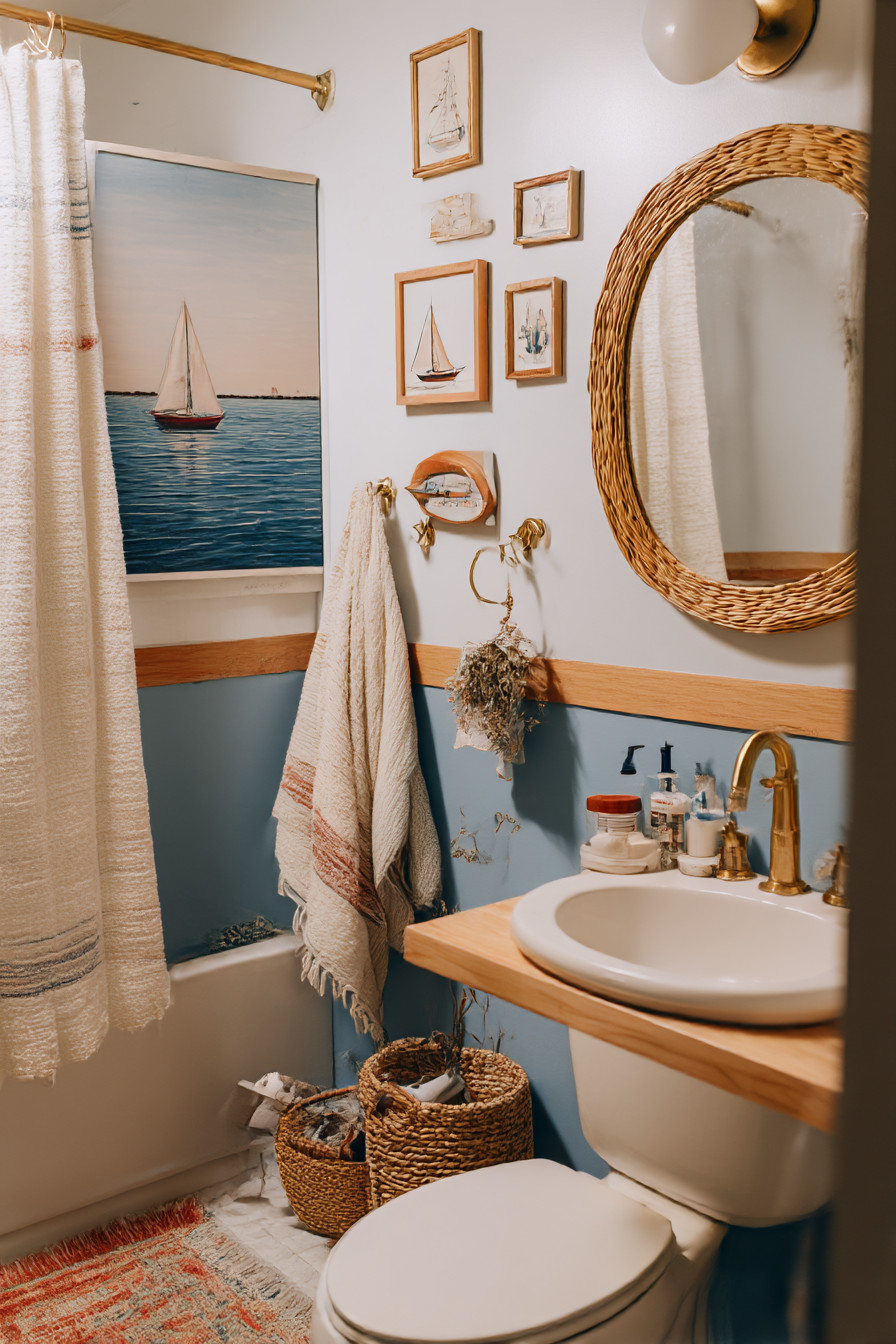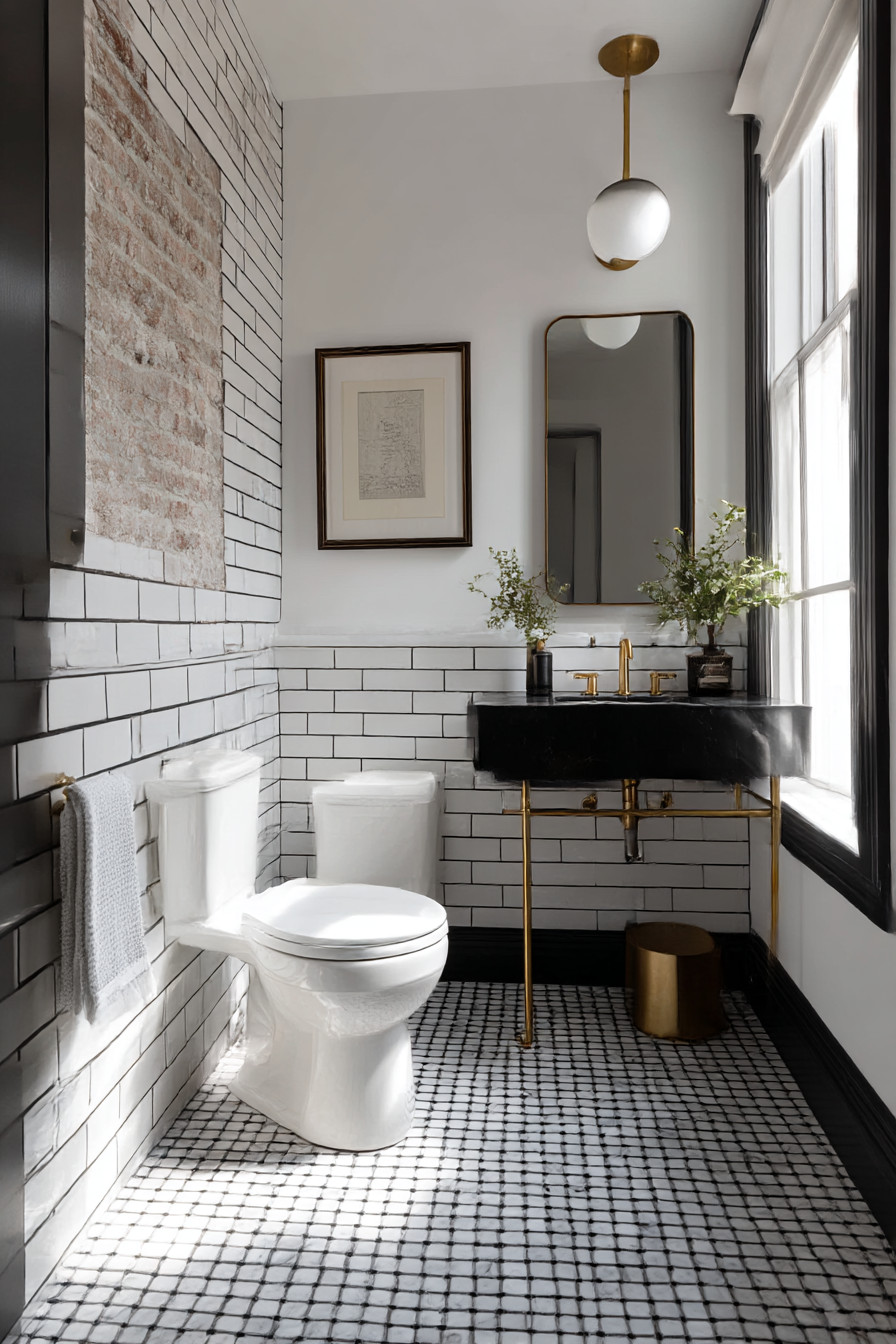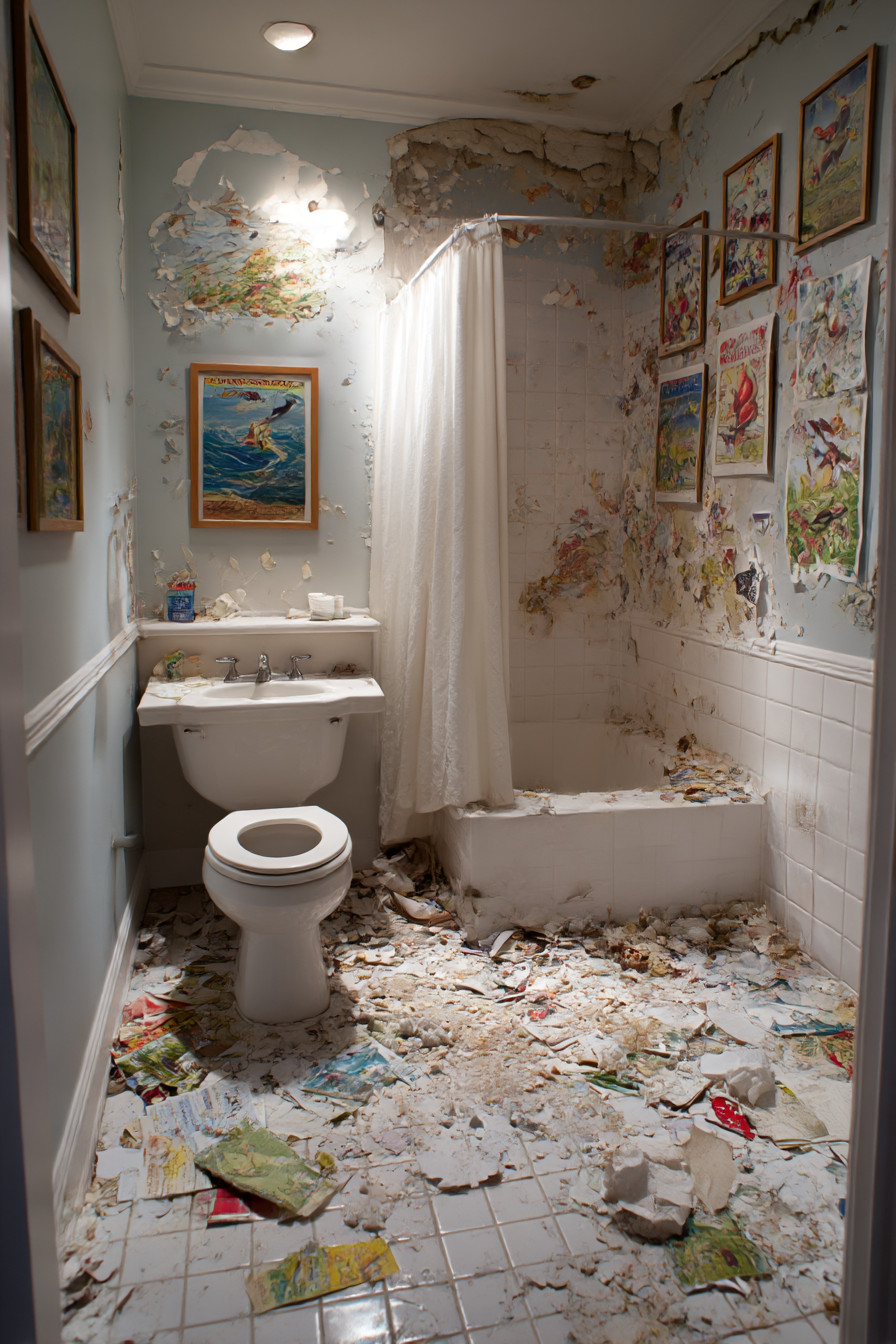
Honestly, for the longest time, I thought sticking pictures in the loo was a tad pretentious. Like, you go to the loo to wipe yourself and wash your hands, not visit the Tate Modern. After 18 years of whizzing past other people while trying to find a quiet spot to do my business in a hospital staff loo with magnolia coloured walls, I started to crave something slightly better once I was back in my own house. Something that didn’t remind me of being at work.
It’s funny. I never saw it coming. We went on holiday – we booked this teeny-tiny cottage in the Peak District. Nothing flash – just somewhere to escape after I’d had a really rubbish week on the ward. The bathroom was minuscule – probably no bigger than most people’s wardrobes – but someone who’d stayed here previously had put three small framed pictures on the wall. A few watercolour pictures of local birds – a robin, a bluetit, and what appeared to be a wren. Doubtless cost around £10 each from a craft fair.
But each morning (do you know how it is) I found myself gazing at these little paintings rather than staring at blank walls or fiddling with my mobile phone. There was something about it that made the whole cramped space feel less utilitarian and more… I don’t know… human? When we returned home to our own bathroom with its dull white walls and standard mirror, the contrast was dismal.
That’s when I decided that our bathroom needed some character as well. Oh boy, did I learn some lessons the hard way.
Disaster Number One: Lovely botanical print from a market stall. Beautiful illustration of green ferns which I thought would look fantastic in our white bathroom. Put it into a cheap wooden frame (£8) from Wilko and slapped it on the wall opposite the sink, feeling thoroughly proud of myself. By the time I’d been in the bathroom for a month, the frame had fallen apart. Corners were separating, the backing was warping/bubbling everywhere, it looked like it had been outside in the rain.
Bathrooms are essentially humid storage units and not all frames are created equal; many cannot withstand that kind of environment. Who knew? Perhaps I should have realized that my bathroom at home was likely going to experience similar problems given the amount of time I’ve spent viewing moisture-damaged changing areas in hospitals.
Since then, I’m much more cautious regarding materials. Metal frames work wonderfully – I have aluminium ones that remain flawless even after 2 years of taking showers every single day. These cost significantly more (£25-£40 vs < £10). However, they last longer. I’ve discovered a range of sealed wooden frames with adequate moisture barriers that will also work well; however, these come at a higher price point as well.
Another lesson I learned was with regards to hanging. For fear of breaking either my bathroom tile or hitting a water pipe, I was hesitant to use my drill to create holes for screwing pictures onto the wall. I began to utilize the command strips specifically engineered for high-humidity environments and they’re great. Initially, I was sceptical due to their ease-of-use; however, I have successfully held various prints in place for extended periods without any slippage/falling-off.
As far as weight is concerned, most bathroom art does not require heavy-duty mounting equipment. Most framed pictures are adequately supported by 3M hooks rated for a couple of pounds each.
When considering size, I made an error as well. My bathroom has large white subway tiles that I adore, and therefore I believed a gallery wall of small prints would appear sophisticated. That was massive error. They resembled postage stamp sized images floating on top of this vast expanses of white tiling. Currently, I opt for fewer larger pieces – typically no more than one substantial image or two medium-sized pieces max per wall. Far superior aesthetic.
Subject matter proved to be another variable that required experimentation. First, I attempted abstract geometric prints, believing they would provide a modern/sterile appearance, yet they were too jarring against the rounded contours of my basin and tub. Photography is an infinitely superior option, especially photographs presented in black-and-white with gentle contrast rather than stark/dramatic contrast.
I purchased this wonderful photograph of sand dunes at a photography show in Leeds – cost approximately £20 and provides this lovely textured sense of serenity to the space. The artist was selling some of her previous work at discounted prices; this particular image resonated strongly with me. This photograph has these mellow beige and grey tones that somehow impart a spa-quality ambiance to the bathroom.
If done properly, botanical prints aren’t inherently obvious choices; however, if you select appropriately, they may function well. Avoid vibrant/busy flower prints since they’ll contribute to chaos within a small space. Instead, opt for simple line drawings or antique/vintage style naturalist illustrations. I recently acquired this lovely Victorian fern print as a reproduction online and had it professionally framed – total cost £35 – and it appears as though it belongs rather than simply serving as decorative adornment.
Something that utterly fails to work and which I learned embarrassingly so: Family Photos. I thought it would add more personality and thus placed a good picture of Phil and me from our wedding on the wall near the loo. However, there is something bizarrely disturbing about your husband’s face observing you while you take a bath. Moved that to the hallway relatively swiftly.
Color co-ordination makes everything seem intentional rather than arbitrary. As my bathroom is primarily white with chrome fixtures, I stick to B/W images or muted tones – e.g., soft greens/warm greys/the occasional hint of blue. The sand dune photograph has these lovely soft beige tones that mirror this ceramic natural stone soap dispenser I obtained at a pottery market. Those small associations are what make a room appear deliberate rather than haphazard.
Finally lighting makes an enormous difference as well – although this is something I failed to consider initially. My primary bathroom light is extremely harsh (as are most others), and thus it created unflattering shadows and flattened images. To address this problem, I acquired two small LED picture lights – battery operated ones that affix directly to the tops of the frames. Approximately £15 each – and they entirely changed how my images appear, especially during evening hours when I wish for the space to evoke relaxation.
Incidentally, the moisture problem extends beyond merely frames. Although none of my prints were situated directly within the direct spray area of the showerhead, I observed one developing tiny water droplets on the surface of the glass. Now, I’m more strategic regarding placement — i.e., placing artwork away from the showerhead area and running a portable dehumidifier during those months when steam levels rise. While this seems absurdly excessive, it helps maintain both my artwork and overall ambient quality of the entire room feeling fresh.
Finally practicality matters as well. Initially, I desired to hang multiple prints identical in design above the sink; however, they would have obstructed access to our medication cabinet. Thus, I had to reconsider the layout and relocate them to the opposite wall where they are still visible but do not impede my daily routine. Functionality first — always.
Perhaps the best decision I made was testing everything prior to securing them permanently in place. I utilized removable strips to experiment with varying locations and lived with them for several weeks before opting for permanent attachment using proper fastening methods. An arrangement which may appear aesthetically pleasing while attempting to decorate may prove maddening when you are frantically trying to prepare for work.
My bathroom feels like a real room now rather than just a functional space. With 3 strategically-chosen pieces positioned correctly and illuminated effectively, my daily commutes from mundane hurrying-around-the-house-to-get-ready-for-work are now positively enjoyable experiences. At a combined expense of perhaps £100 plus a considerable amount of time devoted towards thoughtful consideration and preparation — I believe this represents money well spent. Who could possibly have envisioned that something as seemingly trivial as images placed upon walls in a loo could improve so significantly the manner in which you begin and conclude your days?